

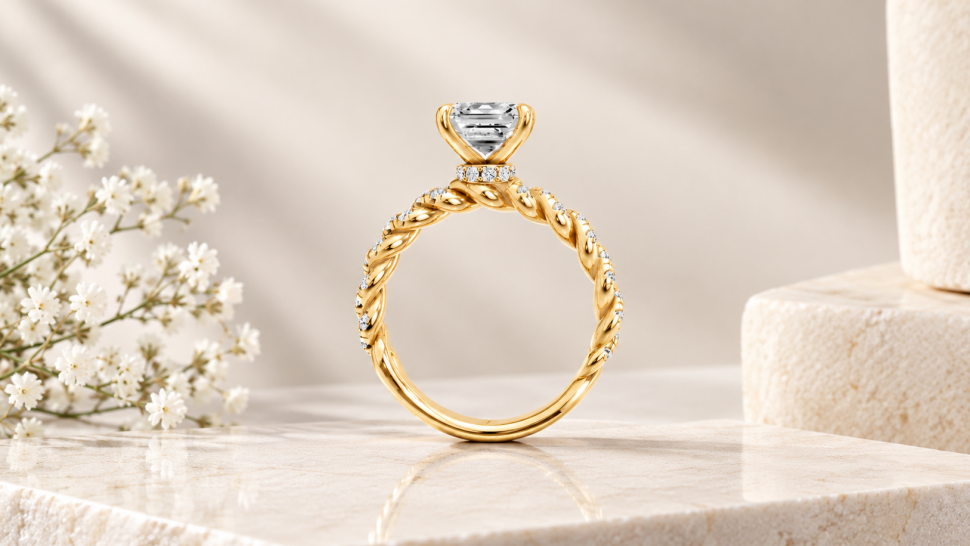

Getting the right fit for an engagement ring is important, especially when it has a detailed design. A ring that feels too tight can make everyday activities uncomfortable, while a loose one may slip off when least expected. If you own a hidden halo engagement ring, resizing requires a little extra attention because of the way its stones and setting are arranged.
Before making any changes, it helps to understand how resizing works, what a jeweler needs to check, and how to protect the ring during the process. A few simple precautions can help you avoid unnecessary damage and keep your ring comfortable for years to come.
Why Resizing a Hidden Halo Ring Needs Extra Care
A hidden halo ring has small diamonds placed beneath the center stone, usually around the basket or underneath the main setting. This design gives the ring a detailed look from the side, but it also means that its structure needs careful inspection before resizing.
Unlike a simple solitaire ring, a hidden halo design may have additional metalwork and small stones close to the area where a jeweler makes adjustments. Cutting or reshaping the band without checking these details can affect the setting.
A professional jeweler should examine the ring's construction, including the position of the hidden halo, the condition of the prongs, and the thickness of the band. This inspection helps determine whether resizing is practical and what method is suitable.
How Much Can a Hidden Halo Engagement Ring Be Resized?
The amount a ring can be resized depends on its design, metal, and construction. Some rings can be adjusted by a small amount without major changes, while others need more careful work.
Small Size Adjustments
A change of half a size or one full size may be possible for many hidden halo rings. However, the jeweler must first check whether the band and setting can handle the adjustment.
Small changes are often easier to manage because they require less alteration to the ring's overall shape. Even so, the presence of small diamonds or decorative details means there is no universal rule.
Larger Size Changes
Resizing a ring by several sizes can be more complicated. Making a ring significantly smaller may require removing a section of the band, while making it larger may involve stretching or adding metal.
Large adjustments can affect the ring's shape and the alignment of its stones. If the ring has a delicate hidden halo setting, ask the jeweler whether a major size change could put stress on the setting or require additional repairs.
Does the Metal Affect the Resizing Process?
Yes. The metal used in your engagement ring can influence the tools, techniques, and time required for resizing.
Yellow gold: Many yellow gold rings can be resized by a skilled jeweler, depending on their design and construction.
White gold: White gold rings can generally be resized, but the finish may need attention afterward. Some rings also require rhodium replating to restore their original appearance.
Rose gold: Rose gold can be more sensitive to certain repair techniques. An experienced jeweler should assess the metal before making adjustments.
Platinum: Platinum rings require specific tools and expertise. Choose a jeweler who regularly works with platinum settings.
If you have a lab grown hidden halo engagement ring, remember that the diamond's origin does not determine whether the band can be resized. The metal, setting structure, and ring design are the main factors.
What Happens to the Hidden Halo During Resizing?
One common concern is whether resizing can loosen the small diamonds beneath the center stone. This is a reasonable question because hidden halo designs often have closely arranged stones in a compact setting.
During resizing, the jeweler needs to protect the entire ring, not just the band. Heat, pressure, or changes in the ring's shape may affect nearby settings if the work is not handled properly.
Before agreeing to the repair, ask the jeweler to check the following:
Whether the small hidden halo diamonds are secure.
Whether the center stone's prongs are in good condition.
Whether the band has enough thickness for the planned adjustment.
Whether the resizing method could affect the setting.
Whether the ring needs a final inspection after the work is complete.
These checks can help reduce the risk of loose stones and unexpected repair costs.
How to Know When Your Ring Needs Resizing
Your ring should feel secure without causing pain or leaving deep marks on your finger. However, finger size can change throughout the day because of temperature, activity, and other everyday factors.
If your ring becomes difficult to remove regularly, feels uncomfortable, or leaves noticeable pressure marks, it may be too tight. On the other hand, if it spins constantly or slips over your knuckle without resistance, it may be too loose.
Try wearing the ring at different times of the day before deciding on a size change. If the fit problem continues, visit a jeweler for a professional measurement rather than relying only on a home ring-sizing guide.
Alternatives to Resizing Your Engagement Ring
Sometimes, resizing is not the only solution. If your ring needs a temporary adjustment or its design makes resizing difficult, consider discussing other options with a jeweler.
Ring sizing beads: Small metal beads can be added inside the band to reduce movement. They may work well for rings that are slightly loose, although they are not suitable for everyone.
Sizing inserts: Removable inserts can help improve the fit without permanently changing the ring. They can be useful if your finger size changes occasionally.
A replacement band: In certain cases, replacing the band may be worth discussing, particularly if the original design cannot accommodate the required size change.
Each option has its own advantages and limitations. A jeweler can explain which solution is appropriate for your ring's structure and your comfort.
Tips Before Sending Your Ring for Resizing
Before leaving your ring with a jeweler, take a few precautions. Photograph the ring from the top and sides so you have a record of its condition. Ask for a clear estimate that includes the resizing work, possible finishing, and any additional inspection.
It is also helpful to ask how long the process will take and whether the jeweler offers a service guarantee. If your ring came with a manufacturer warranty, check whether resizing by an outside jeweler could affect its coverage.
For anyone comparing designs before purchasing, View Collection of lab grown hidden halo engagement ring options from Antiquecut and pay attention to the band style, metal, and setting details. Knowing these features in advance can make future maintenance decisions easier.
Final Thoughts
Resizing a hidden halo engagement ring is possible in many cases, but the design deserves careful attention. The band material, number of stones, setting structure, and amount of adjustment all affect the process.
Rather than rushing into a size change, have a qualified jeweler inspect the ring and explain the available options. A comfortable fit should never come at the expense of the ring's structure. With the right advice and a little preparation, you can enjoy wearing your engagement ring without worrying about unnecessary damage.



Share the News