

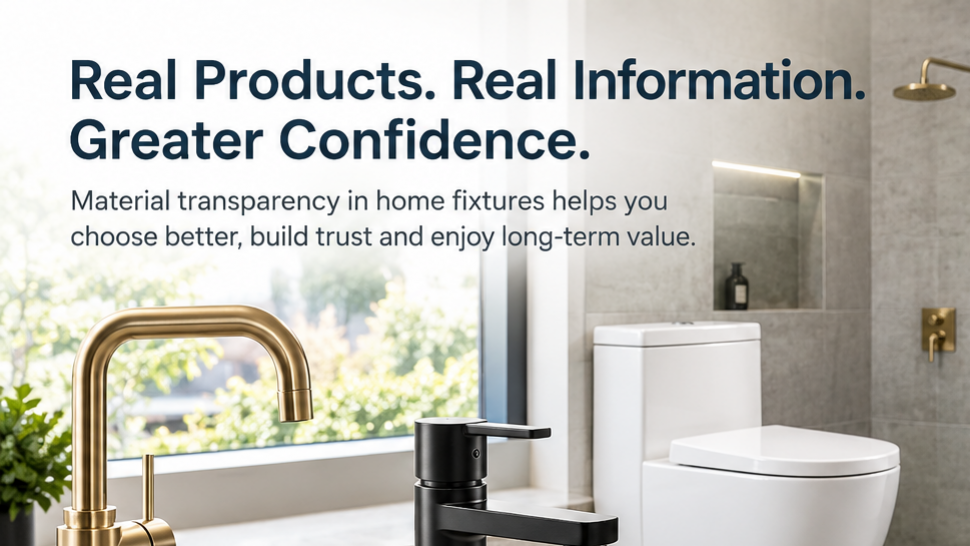

In most retail categories, transparency about what a product is actually made of has become a competitive differentiator rather than a regulatory afterthought. Home fixtures, bathroom and kitchen tapware, sanitary ware, garage doors, are no exception, and businesses that lead with this kind of transparency are increasingly standing out from those that don't.
The Problem With Opaque Product Information
For years, fixtures have been marketed primarily on finish and style, chrome, matte black, brushed brass, while the underlying materials, solid brass versus zinc-alloy, genuine vitreous china versus lower-grade ceramic, go largely unmentioned. Two products can look identical in a listing while performing completely differently after a few years of use, and most buyers have no easy way to tell the difference without asking the right questions directly.
Why This Matters for Buyer Trust
Buyers increasingly research before purchasing, and a growing number are asking pointed questions about material composition, warranty coverage details, and expected product lifespan, not just comparing finish photos. Businesses that proactively provide this information, rather than requiring customers to extract it through direct questioning, tend to build more durable trust relationships with their customer base.
The Business Case for Transparency
Beyond the ethical argument, transparency has a practical business case. Products backed by genuine durability generate fewer warranty claims, fewer negative reviews tied to premature failure, and more repeat business from customers who had a positive long-term experience rather than a disappointing one. Short-term margin gains from cutting material costs are frequently offset by long-term reputational costs once failure patterns become visible through reviews and word of mouth.
A Model Worth Examining
Vogue Fixtures, an Adelaide-based supplier of premium bathroom, kitchen, lighting and garage door fixtures, has built its business model around exactly this kind of transparency, specifying material composition and being direct about warranty coverage rather than relying on vague marketing language. The company serves homeowners, builders and trade professionals across Australia, and its approach reflects a broader shift in how informed buyers are approaching fixture purchases generally, prioritising verifiable claims over aesthetic marketing.
What This Suggests for Retail More Broadly
As buyers across virtually every product category become more sophisticated about researching before purchasing, businesses that build transparency into their core offering, rather than treating it as a customer service afterthought, are likely to be better positioned for long-term customer retention than those competing purely on price and appearance.
Learn more about this approach at https://voguefixtures.com.au



Share the News