

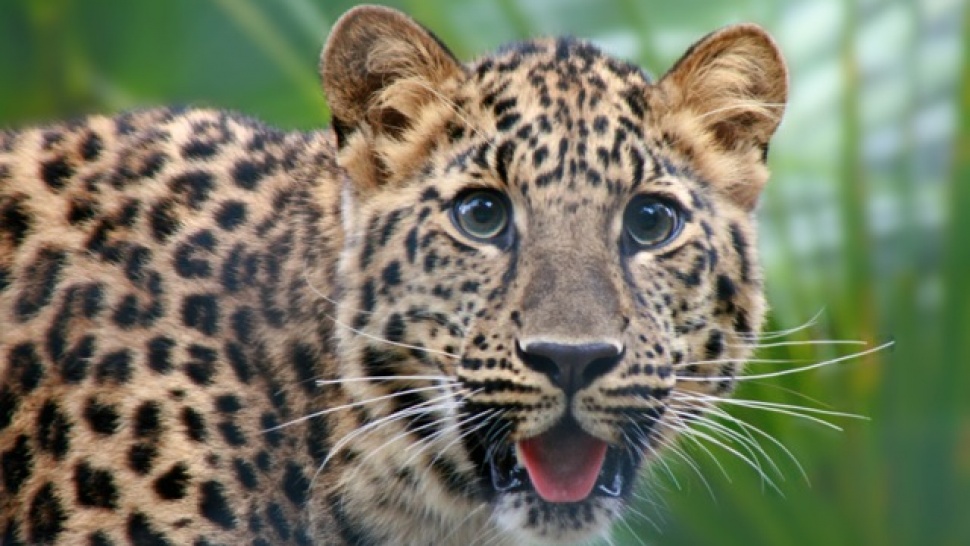

The Amur leopard is also known as the Far Eastern leopard.
Male Amur leopards weigh 32-48 kg, with exceptionally large males up to 60-75 kg. Females are smaller than the males at 25-43 kg.The coat is pale cream with widely spaced rosettes with thick, black rings and darkened centers. The length of the coat varies between 2.5cm in summer and 7.5cm in winter. In the wild, leopards live for 10-15 years and they may reach 20 years in captivity. The female will give birth to 2 cubs each spring.
Amur leopard (Panthera pardus orientalis) on ARKive.org
The Amur leopard (Panthera pardus orientalis) is the northernmost of the eight leopard subspecies with its range extended throughout northeastern China, the southern part of Primorsky Krai in Russia and the Korean Peninsula.
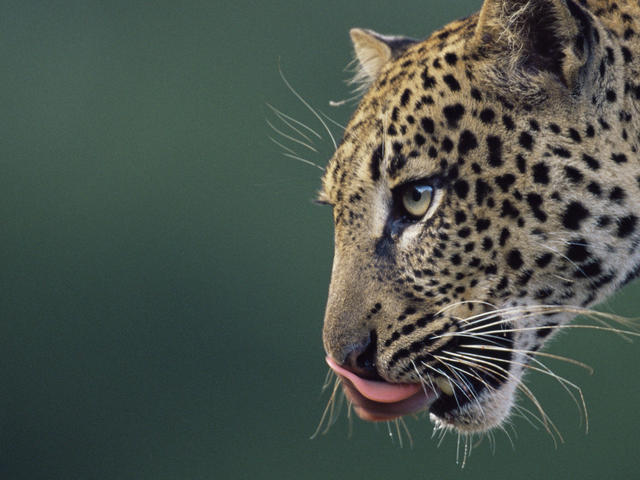
This range decreased due to habitat loss due to:
1. Hunting – Russian hunters kill many more deer than is officially allowed and Amur leopards are sometimes shot or killed with snares as well. Since 2002 skins or corpses of nine Amur leopards killed by poachers were found in Russia and at least two leopards were killed in China.
2. Loss of forest habitat due to frequent fires - Local villagers start fires for various reasons, but mainly to stimulate the growth of ferns that are a very popular ingredient in Russian and Chinese dishes.
Amur Leopard: One of the World's Most Endangered Cats
3. Negative impacts of inbreeding – Loss of genetic diversity in the small and isolated Amur leopard population may cause inbreeding depression (reduced numbers due to reduced reproduction and lifespan and increased vulnerability to diseases.
4. Development projects – Southwest Primorye is located close to the Russian borders with China and North Korea, making it an attractive area for infrastructure projects such as new railways, gas and oil pipelines and ports. In 2005 and 2006 the Zoological Society of London and other ALTA partners led a successful international campaign against a plan to build an oil pipeline terminal on the coast of the Sea of Japan in the leopard’s range.
5. Lack of political commitment to conservation – Russia has abolishment of the State Committee for Nature Conservation, revoking the law enforcement rights of Inspection Tiger (an anti-poaching brigade for protection of tigers and leopards), and a reduction of the number of field inspector for protection of forests and animals by approximately 80%.
Share the News