


A program that has convinced people he is a boy became the first computer ever to pass the Turing test.
Test that verifies that computers are like people is considered a cornerstone in the development of artificial intelligence, but scientists warn that such technology could be used in cyber crime.
Alan Turing, a mathematician of the first half of the 20th century who is considered the father of the programming, argued that the computer could be seen as a machine that thinks if it manages to pass the test. In order for computer to pass the test, 30% of human subjects after a five minute "conversation" with it must be convinced that they were talking to the human being.
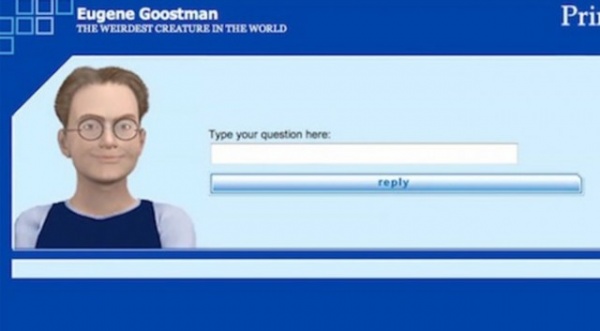 Eugene Goostman, a computer program that was designed by a team from Russia, managed to pass this test in London. It convinced 33% of judges that it is a man, said the academics at the University of Reading who organized test.
It is the first computer that was able to pass the legendary test, though there were allegations that some other programs also succeeded, but with pre-prepared topics and questions.
"Our main idea was that 'he' should claim to know everything, but because of 'his' age it is quite reasonable that 'he' does not know everything. We spent a lot of time developing the personality that would be persuasive to humans,"said Vladimir Veselov, one of the creators of the program.
According to British "The Independent", the success of the Russian program causes the opposite response. Kevin Warwick, a visiting professor at the University of Reading, says he will likely raise concerns for future programming.
Share the News