

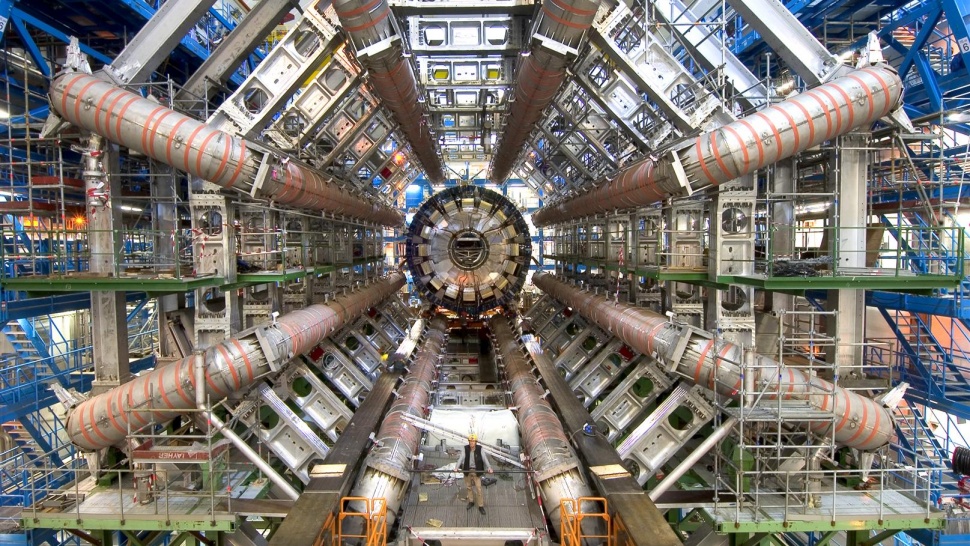

"Big Bang machine", as some call it, in a meanwhile undergone a number of revisions as well as a significant upgrade, so that the subatomic particles in the future could collide twice as powerful than before.
The largest and most powerful particle accelerator in the world, which will be operational next three years, will repeat experiments from 2012 which led to the discovery of Higgs boson, but will also open up new horizons for physics of the future.
Proton-rays will be beamed through a giant machine at the end of this month, while the first collisions are planned for May. Scientists hope they will gain all sorts of new results, and mostly, to have the opportunity to peek in the mysterious dark matter the first time. This is the main goal of the new experiments.
 Ninety-five percent of the universe is unknown to us. Dark matter makes the most of the universe, but scientists still have not managed to see or detecte it, although it affect the everyday occurrences such as radiation, the very structure of the galaxy and the universe in general.
"What we know about dark matter is that it exists, but almost nothing more than that," said Professor Michael Williams from the Massachusetts Institute of Technology (MIT).
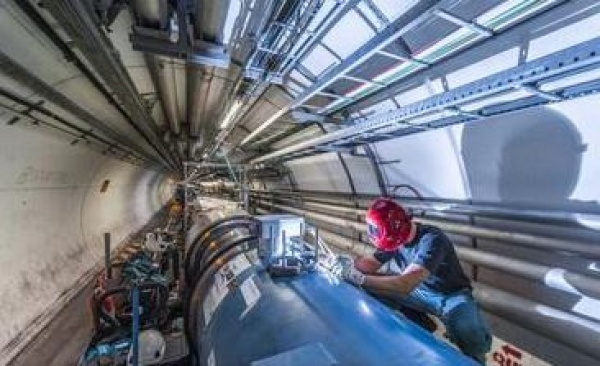
CERN has invested nearly $ 150 million in upgrading the LHC. According to officials, the machine is now practically as new.
Share the News