

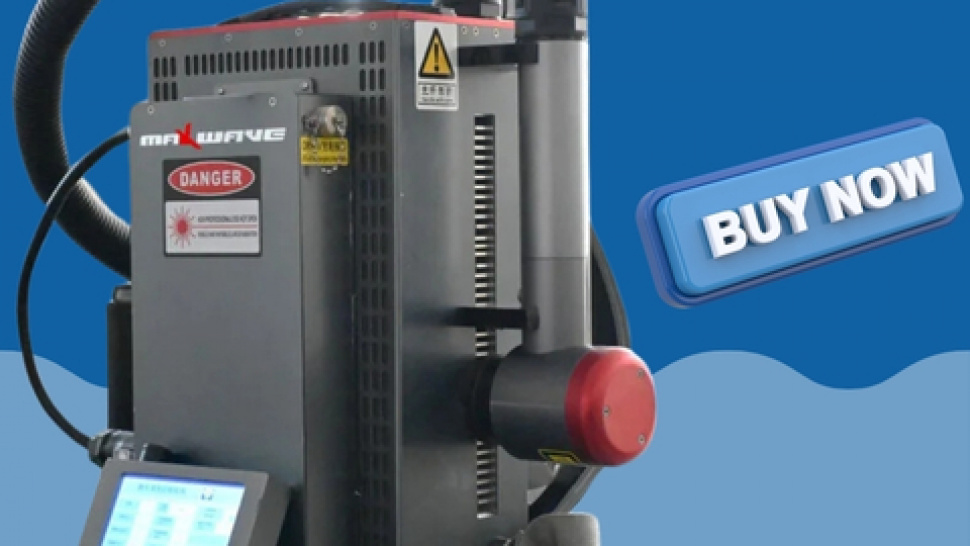

Unlike conventional cleaning methods that rely on abrasives, chemicals, or solvents, handheld laser cleaner use focused laser technology to remove contaminants from surfaces with accuracy and control. This makes them suitable for a wide range of industrial sectors, from automotive and aerospace to electronics and metal fabrication.
The primary function of a handheld laser cleaner is to target unwanted surface materials, such as rust, oxidation, paint, coatings, or residues, without affecting the underlying base material. The laser energy interacts with the contaminant, vaporizing or dislodging it layer by layer while maintaining the integrity of the substrate. This precision makes handheld laser cleaners ideal for tasks where traditional mechanical or chemical cleaning methods may cause damage or inconsistencies.
Handheld laser cleaners are engineered for portability and flexibility, enabling operators to access tight spaces and intricate surfaces. The lightweight and ergonomic design allows extended usage without excessive fatigue, making them suitable for workshop environments and field operations alike. Additionally, these devices typically incorporate adjustable settings for laser power, frequency, and pulse duration, providing control over the cleaning intensity and speed. This adaptability ensures that different materials, thicknesses, and contamination levels can be addressed efficiently.
Industries such as automotive manufacturing and repair benefit greatly from handheld laser cleaners. In automotive workshops, these tools are used to remove paint layers from body panels, clean welds, or prepare surfaces for coatings and adhesives. In aerospace, handheld laser cleaners are employed to maintain precision components, removing oxidation or residues from turbine blades, fuselage parts, and structural elements without introducing chemical contamination. Similarly, electronics manufacturers use handheld laser cleaners to clean circuit boards, remove residues, or prepare surfaces for assembly without risking damage to sensitive components.
The operation of a handheld laser cleaner is straightforward yet requires precision. Users typically hold the device at a controlled distance from the surface, guiding the laser beam along the targeted area. The cleaning process can be monitored visually, as the laser selectively removes surface contaminants. Some devices feature real-time feedback mechanisms, allowing operators to adjust parameters dynamically for optimal results. This combination of control and visibility ensures that the cleaning process is both efficient and accurate.
Material compatibility is another key consideration for handheld laser cleaners. They are effective on metals, ceramics, composites, and certain polymers, allowing versatile application across different industries. For example, in metalworking, handheld laser cleaners can remove rust and scale from steel, aluminum, or copper components, preparing them for welding, coating, or finishing processes. In artistic and restoration applications, these devices can clean delicate surfaces like sculptures, antiques, or stonework, revealing original textures and details without causing harm.
Energy efficiency and operational safety are integral to handheld laser cleaners. Advanced models are designed to maximize cleaning efficiency while minimizing energy consumption, allowing prolonged operation in professional environments. Safety measures, including protective housings, interlocks, and laser-specific eyewear, ensure that operators can work with the devices confidently. Furthermore, the absence of chemicals and abrasives reduces environmental impact and simplifies disposal requirements, making handheld laser cleaners a sustainable option for industrial maintenance.
Handheld laser cleaners also support process standardization in professional environments. The ability to precisely control cleaning parameters ensures consistent results across multiple components and surfaces. This repeatability is especially critical in industries with strict quality standards, such as aerospace or medical device manufacturing. Operators can achieve the same cleaning effect on multiple parts without introducing variability, supporting quality assurance and compliance with regulatory requirements.
Maintenance and longevity of handheld laser cleaners are designed to align with industrial demands. Many devices incorporate self-monitoring systems to alert users to laser performance, lens conditions, and power output. Regular inspection and calibration maintain peak performance, ensuring that the device continues to deliver precise cleaning results over time. The durability of handheld laser cleaners makes them a reliable investment for workshops and industrial facilities seeking long-term performance.
Training and skill development are important considerations for effective use of handheld laser cleaners. Operators need to understand surface properties, laser-material interactions, and parameter settings to achieve optimal results. Professional training programs, manuals, and manufacturer guidance provide the necessary knowledge to safely and efficiently operate these devices. With proper instruction, operators can handle complex cleaning tasks confidently, whether in small workshops or large-scale industrial settings.
Applications of handheld laser cleaners extend beyond traditional industrial uses. In the restoration of historical artifacts, museums and conservation professionals employ these tools to remove corrosion, dirt, and contaminants from metal, stone, or wood surfaces. In research laboratories, handheld laser cleaners prepare experimental samples or clean sensitive equipment. Even in shipbuilding and marine industries, these devices remove rust and marine deposits from metal surfaces without abrasive methods that could compromise structural integrity.
The portability of handheld laser cleaners also allows integration with automated or semi-automated workflows. Some models can be mounted on robotic arms or guided systems to clean complex geometries repeatedly, reducing manual labor while maintaining precision. This versatility makes handheld laser cleaners a flexible solution in both manual and semi-automated production environments.
Continuous technological development has enhanced the capabilities of handheld laser cleaners. Advances in fiber laser technology, pulse modulation, and compact power sources have improved cleaning speed, efficiency, and safety. As a result, modern handheld laser cleaners can perform tasks that previously required multiple steps or specialized equipment, streamlining workflows and reducing operational complexity.
In conclusion, handheld laser cleaner represent a modern, precise, and adaptable method for surface cleaning across a wide range of industries. They enable professionals to remove contaminants efficiently, maintain surface integrity, and achieve consistent results. Their applications span from industrial manufacturing and automotive repair to artistic restoration and laboratory use. Designed for portability, precision, and operational safety, handheld laser cleaners provide an advanced cleaning solution for professionals seeking accurate and reliable surface preparation tools.
Share the News