

A mirror booth for sale is more than a touchscreen mirror with a camera hidden behind the glass. Smart buyers compare image quality, touch response, software updates, and long-term support before they compare price.
Most articles focus on booth design. But experienced buyers usually care more about what happens behind the mirror. Camera placement, software speed, and update support affect how well the booth performs over time. That is why businesses now spend more time comparing system quality before buying.
What Makes a Mirror Booth Different From a Standard Photo Booth
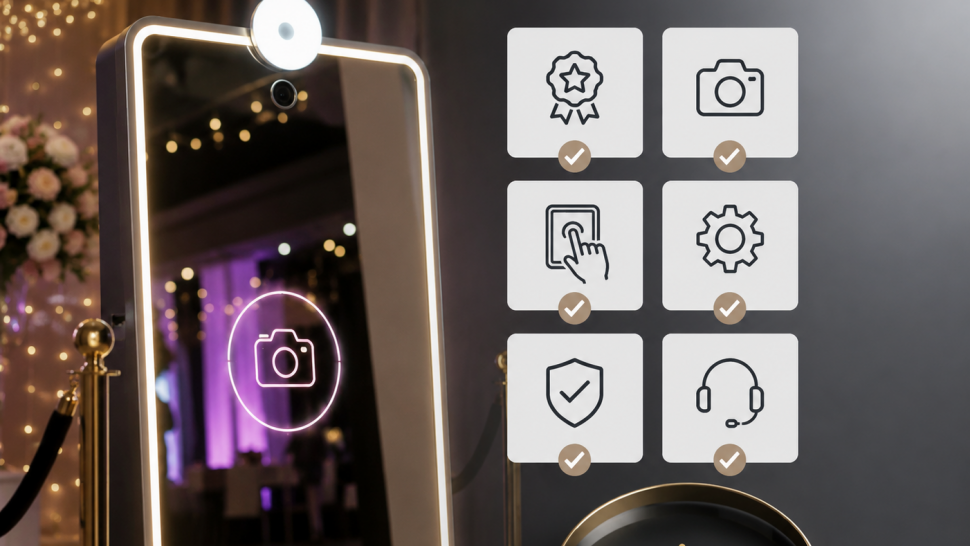
A mirror booth is a full-length interactive screen that takes photos through a two-way mirror. It works like a touchscreen mirror while hiding the camera and lighting system behind the glass.
Traditional booths focus on printing photos. Mirror booths focus more on guest interaction. The software guides users with animations, touch prompts, and digital effects. That extra interaction keeps guests engaged for longer periods.
Why Mirror Quality Affects Photo Performance
The mirror itself plays a big role in image quality. A weak mirror may look fine from the outside, but it can reduce light and make photos appear darker.
What Buyers Should Check in Mirror Glass:
Smart buyers usually compare these details first.
- Reflectivity and transparency balance
- Tempered safety glass for busy spaces
- Light transmission for DSLR cameras
- Scratch resistance and long-term durability
High-clarity glass allows the hidden camera to capture cleaner images. It also keeps the mirror reflective enough for guests to use naturally.
This matters in restaurants, retail stores, hotels, and nightlife spaces where booths handle constant use.
Why Camera Placement Changes the Final Photo
Camera alignment affects how natural photos look. Poor positioning creates awkward eye lines and uneven framing.
Understanding the Parallax Effect
The camera sits behind the mirror. Its height and angle must line up correctly with the user standing in front of the glass.
If the alignment is off, the guest may appear to look away from the camera even while facing the mirror directly. Full-body photos become harder to frame correctly too.
Experienced operators usually test different angles before installing the booth permanently.
How Interactive Software Keeps Guests Using the Booth
The software experience often matters more than the hardware itself. Fast interaction keeps the experience smooth from start to finish.
Why Animation Flow Matters
In busy hospitality spaces, guests react more to interaction than to the mirror itself. Animated prompts, voice guidance, and digital signing features keep attention longer.
One operator compared the experience to a modern phone booth because the interaction feels private, immersive, and personal at the same time.
Short compliment screens and playful transitions often increase repeat sessions during the night.
What Buyers Should Compare in Touchscreen Performance
Touch response changes how natural the booth feels. Delayed screens break the flow quickly.
Capacitive touch systems work better because they react instantly to finger movement. This creates a smartphone-like response even through thick protective glass.
Fast touch response becomes more important in crowded hospitality environments where users expect instant feedback. Slower systems often lead to abandoned sessions.
Which Software Features Matter Most in 2026
Modern mirror booths now work like smart content systems instead of simple photo machines. Businesses draw a parallel between software tools carefully because software affects long-term usability.
AI Features Buyers Check First
Important software features usually include
- AI beauty filters
- Virtual backgrounds without green screens
- QR sharing tools
- Digital effects and animations
- Overnight software updates
- Email and phone capture systems
Today’s interactive mirror booth systems use AI to add filters and effects automatically. A smart selfie mirror can even remove backgrounds in real time without extra equipment.
Digital sharing has changed too. One newer digital photo mirror system now includes animated phone booth prop overlays that guests can place directly onto photos before sharing them online.
This shift matters because guests now expect fast editing and instant sharing from every photo experience.
Businesses researching how much businesses spend on photo booths often compare software support costs before comparing hardware prices.
Why Buyers Compare Build Quality Before Buying
Build quality affects how long the booth performs well in commercial spaces. Cheap materials often lead to touch issues, weaker lighting, and unstable frames after repeated use.
A premium magic mirror photo booth to buy should include strong housing, responsive software, and commercial-grade lighting. Buyers usually check frame durability and internal cooling systems before making a final choice.
How Smart Buyers Measure Long-Term Support
Mirror booths need regular software updates to stay useful. Filters and visual trends change quickly.
A booth that cannot update its software may feel outdated within months. Remote updates help operators keep animations, sharing tools, and visual effects current without replacing hardware.
Technical support matters too. Fast replacement service reduces downtime and keeps the booth operating consistently in high-traffic locations.
Why Profit Share Models Build More Trust
Profit share systems lower the financial risk for venues. Instead of buying equipment upfront, venues share revenue with the provider over time.
This model shows confidence in the product because the provider depends on booth performance to earn revenue.
Which Mirror Booth Providers Are Buyers Comparing Today
Buyers evaluate software reliability, hardware durability, and support quality more than exterior design alone.
Companies such as The Photo Booth Company, Snappic, and LA Photo Party are often put side-by-side because they focus on interactive software, AI features, and long-term support systems.
Businesses planning to install a mirror booth should evaluate update support, camera quality, and interaction flow before making a final decision.
FAQs
What is the ideal mirror size for hospitality spaces?
Most venues prefer a full-length mirror because it captures group photos and full-body shots more naturally.
Do mirror booths need internet access?
Internet access helps with software updates, QR sharing, and cloud storage. Basic photo capture can still work offline.
How long does a mirror booth usually last?
A well-maintained system can operate for several years if the software receives regular updates and the glass stays protected.
Are AI filters common in mirror booths now?
Yes. Most modern systems now include AI beauty filters, background removal, and digital effects as standard features.
Can mirror booths collect customer information?
Yes. Many systems include send to phone and email sharing tools that help venues collect customer data with user permission.
Share the News