

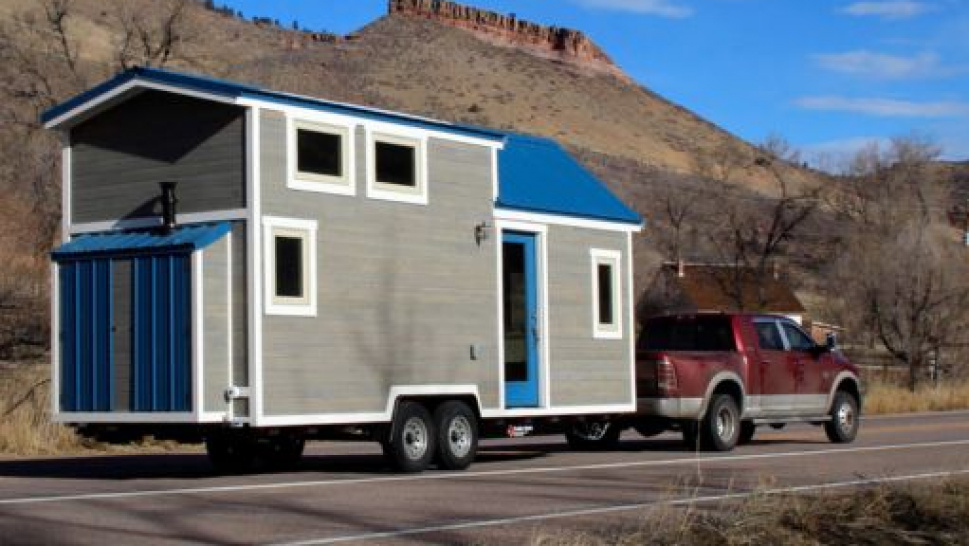

I've been doing this a long time now, and I still get the same question every week. Somebody calls me up, real excited, and says "I found a great deal on a trailer, can you just build my tiny house on it?" And I have to slow them down. Because the trailer isn't just a platform you slap a house on top of. It's the foundation. Literally and figuratively. Get it wrong and everything after that is a headache.
The Trailer Is Not Just a Trailer
People treat the tiny home trailer like it's an afterthought, something you grab off Craigslist and forget about. That's a mistake, and honestly it's the most common one I see. A proper tiny house trailer is engineered for the load, the axle placement, the tongue weight, all of it. If your walls and roof and appliances aren't distributed right over those axles, you're gonna have problems down the road. Sometimes literally, when you're towing the thing at 65 miles an hour and it starts to sway.
I've had clients come to me with a trailer they bought used, no paperwork, no idea what the GVWR even is. And I gotta tell them, sorry, we can't build on this safely. That's not me being difficult. That's just physics.
What Makes a Tiny Home Trailer Different From a Regular Utility Trailer
A lot of folks assume any flatbed trailer will do. It won't. A real tiny home trailer has a lower deck height, so you're not building a house that's twelve feet tall and illegal to drive down the highway. It also has outriggers, which give you a little extra width for your walls without adding to the axle load. Little details like that matter more than people think, and most of them only find out the hard way.
There's also the question of rust protection and drainage. You're gonna live on this thing, maybe for years, maybe forever. If water pools under your subfloor because the trailer deck wasn't designed right, you'll be dealing with rot before you know it. I've torn apart floors that looked fine from above and found black mold underneath, all because somebody used the wrong trailer.
Tiny House Code Isn't Optional, Even If You Think It Is
Here's something that surprises people. There's no single national "tiny house code," not really, even though everybody talks like there is. What you actually deal with is a patchwork of state amendments, IRC appendices, and local zoning rules that vary depending on where you plan to park the thing. Some jurisdictions treat a tiny home on wheels as an RV. Others treat it as a dwelling. That distinction changes everything, from insurance to whether you can legally live in it full time.
This is where working with tiny house experts actually pays off, and I don't say that just because it's my job. I say it because I've watched people spend eighteen months building a beautiful home only to find out their county won't let them park it anywhere. That's heartbreaking, and it's avoidable.
Why an ADU Builder Might Be Your Better Option
Now here's a curveball. Sometimes a tiny house on wheels isn't actually what you need. If you're building on your own property, permanently, an ADU builder route might make more sense. An ADU, accessory dwelling unit, sits on a foundation, follows a different set of codes, and in a lot of cities it's becoming the easier path to approval because local governments are actively trying to encourage more housing stock.
I work both angles, tiny house trailers and ADU builds, because clients need different things. Somebody who wants mobility, who wants to move the house if life changes, that's a trailer build every time. Somebody who owns land and wants a permanent guest house or rental unit, that's usually better served going the ADU route. Neither one is objectively better. It just depends what you're trying to do with your life, honestly.
Buying a Tiny Home For Sale vs Building Custom
Browsing a tiny home for sale online feels easier, I get it. You see the price, you see the photos, done. But used and even some new builds on the market were built to whatever standard the builder felt like using that year. No two are the same. When you go custom, you control the insulation, the trailer spec, the layout, even down to where the plumbing runs so it doesn't freeze in January. It costs more up front sometimes. It saves you money for the next twenty years.
I'm not knocking the pre-built market. Some of it's good. Just go in with eyes open and ask hard questions about the trailer underneath, because that's the part nobody photographs for the listing.
Get the Foundation Right and the Rest Follows
At the end of the day, whether you go tiny house trailer or ADU builder, the lesson's the same. Start with the foundation, get the legal stuff sorted before you fall in love with the design, and don't cheap out on the part of the build nobody sees. I've built enough of these now to know the ones that last twenty years and the ones that fall apart in five, and it almost always comes back to decisions made in week one. Do that part right, and the rest of the build, the fun part, the part with the cedar siding and the little loft window, that part takes care of itself.
Share the News