

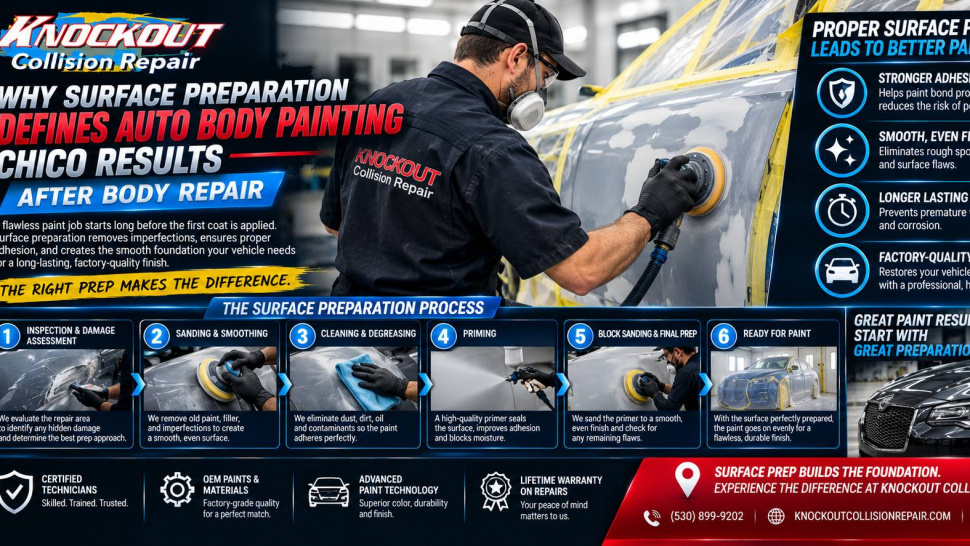

Can fresh paint hide poor repair work underneath it? Maybe for a short time. Once light hits the panel from different angles, sanding lines, low spots, repair edges, or contamination can show through. That is why auto body painting Chico depends heavily on preparation before any color reaches the vehicle.
A repaired panel may contain factory paint, filler, primer, bare metal, plastic, or an older refinish. Each one reacts differently. A technician has to identify the surface first, then choose the cleaning, sanding, priming, and blending process around it. Good paint cannot rescue a bad foundation.
Why Cleaning Comes Before Sanding
Road film, wax, silicone, grease, polish, adhesive residue, and dust can stay on a damaged panel even after washing. Sanding too early can push those contaminants into the surface. Once trapped, they may affect adhesion later.
For auto body painting Chico, technicians often clean the repair area more than once. They may clean before sanding, after body work, and again before coatings go on.
Knockout Collision Repair has served Chico since 1999 and follows manufacturer-focused repair practices when damage extends beyond the paint layer.
How Sanding Changes the Finished Panel
Sanding is not one step with one abrasive. Coarser grits can shape filler and remove damaged coatings. Finer grits reduce those scratches and prepare the panel for primer, sealer, basecoat, and clear coat.
This part of car paint repair needs patience. If deep scratches remain, gloss can make them easier to notice. Edges and body lines need extra care because they catch light differently.
A professional auto body paint shop should inspect the panel by touch and from more than one angle. A surface that looks flat from straight on can still show a wave along a curved fender or door.
Why Primer Must Match the Material
Primer may protect exposed metal, improve adhesion, fill fine sanding marks, or create a more even base for color. One primer system does not suit every surface.
In auto body painting in Chico, the choice can change between steel, aluminum, plastic, filler, and previously painted panels. Cure time counts too. If primer has not cured as required, later coatings can shrink or reveal repair edges.
That is one reason auto refinishing cannot be rushed from body work straight into color. Each coating needs the right surface below it.
What Technicians Check Before Paint Matching
Paint codes give technicians a starting point, not a complete answer. A vehicle may have spent years in strong sun, had previous repairs, or carry a metallic or pearl finish that changes with angle and light.
Before color application, technicians may check:
- Factory paint code and available variants
- Fading on nearby panels
- Existing clear coat condition
- Metallic or pearl orientation
- Size of the blend area
- How the repaired panel reflects light
Knockout Collision Repair uses advanced color-matching technology and provides a written lifetime paint warranty on qualifying refinishing work, subject to its warranty terms.
Why Blending Starts With Preparation
A correct color formula can still look wrong if the blend area was prepared badly. Adjacent sections need proper cleaning and sanding so fresh color can transition into the existing finish without a hard edge.
This is where car paint repair becomes more than matching a code. The technician has to judge how far the blend should extend. Panel layout, paint type, fading, and previous repairs can all change that decision.
Strong auto refinishing work often looks simple when finished. The reason is usually the work nobody sees after the clear coat goes on.
How Contamination Can Spoil Good Paintwork
Preparation does not stop after primer. Dust, fingerprints, silicone, masking debris, or polish residue can return before spraying. Even a small amount can create fisheyes, rough texture, adhesion trouble, or visible marks.
Contamination control is continued during the refinishing process with auto body painting in Chico. Technicians must ensure surfaces are prepared and protected, between stages cleaned, and surfaces inspected prior to basecoat application.
Panels that have been previously refinished should be given special consideration. Old coatings can react badly with newer materials. Painting over an unstable layer only hides the problem for a while.
Why Clear Coat Exposes Earlier Mistakes
Clear coat provides gloss and protection, but also makes surface defects more visible. Poor blending or texture changes, filler that isn't level, sanding scratches or repair edges may become more noticeable as the finish develops.
A final inspection should check more than shine. Color transition, gloss, texture, panel shape, dust marks, and the repaired area from several angles all need review. Paint is the visible part of the repair. Preparation decides whether that visible part looks right.
Conclusion
Surface preparation affects adhesion, color consistency, texture, and how naturally a repaired panel matches the rest of the vehicle. Cleaning, sanding, primer choice, blending, and contamination control all influence the result.
Drivers comparing auto body painting in Chico should look past broad claims about premium paint. More interesting questions include how a shop handles various materials, how it prevents contamination, how it blends the materials, and how it inspects the surface product before shipping it. That information reflects on the quality of the repair.



Share the News