

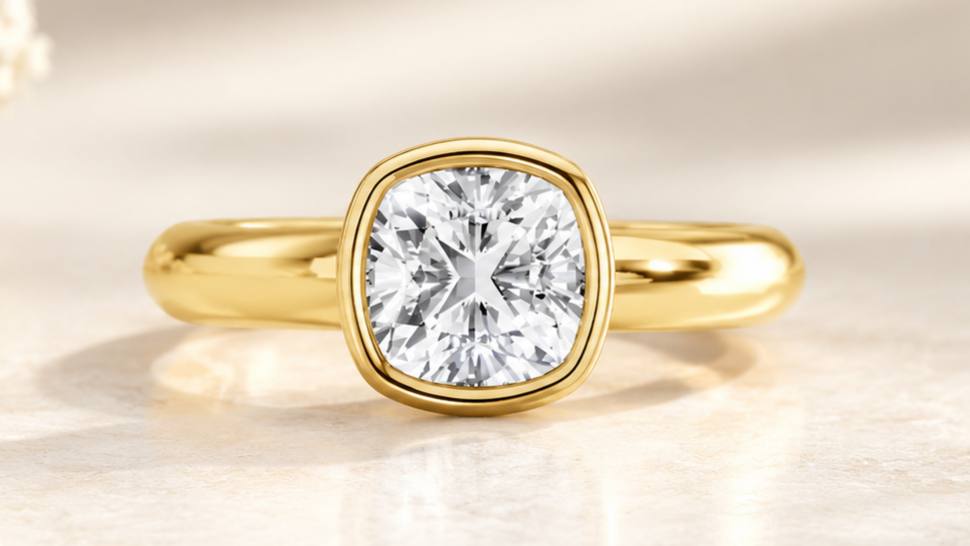

When choosing an engagement ring, the setting can change the entire look and feel of the piece. Some settings place the diamond high above the band, while others use small prongs to hold the stone in position. Bezel engagement rings take a different approach by surrounding the outer edge of the diamond with a thin rim of metal. This design gives the stone a secure appearance while creating a clean outline around its shape.
A bezel setting can work with many diamond cuts, metals, and ring styles. It can also be a practical choice for someone who wants an engagement ring that feels comfortable during everyday activities. From a simple solitaire to a detailed design with side stones, the bezel setting offers plenty of room for personal preferences.
What Is a Bezel Setting?
A bezel setting holds a diamond by placing a metal rim around some or all of its outer edge. Instead of relying mainly on individual prongs, the metal surrounds the stone and keeps it in position.
The rim can be designed as a full bezel, where the metal completely circles the diamond, or as a partial bezel that leaves sections of the stone's edge visible. The choice depends on the desired appearance and the shape of the diamond.
Because the metal follows the outline of the stone, the setting can emphasize the diamond's shape. Round, oval, pear, emerald, cushion, and other cuts can all be used with bezel settings when the design is properly made.
How Are Bezel Set Engagement Rings Different?
The main difference comes down to how the diamond is secured and presented. Traditional prong settings use several small metal claws positioned around the stone. A bezel setting instead uses a continuous or partial metal border.
This changes both the appearance and the practical qualities of the ring.
The metal border can help protect the diamond's edges from direct contact with surrounding surfaces. This can be particularly useful for diamond shapes with pointed corners or edges that need additional consideration during everyday wear.
The setting also creates a defined outline around the diamond. Rather than allowing the stone to appear separated from the band, the bezel creates a visual connection between the center stone and the rest of the ring.
Protection for Everyday Wear
One reason people consider a bezel diamond engagement ring is the additional coverage around the diamond.
The metal rim sits around the stone's perimeter, helping shield its edges from accidental knocks. This does not make a diamond impossible to damage, but the surrounding metal can provide an added layer of protection compared with more exposed settings.
For someone who works with their hands, travels frequently, or simply prefers a ring that feels secure, this can be an important consideration.
The height of the setting also matters. A lower-profile bezel can reduce the chance of the ring catching on clothing or other objects. The final design should still be selected according to the diamond shape, band width, and the wearer's daily routine.
A Clean Outline Around the Diamond
The bezel setting creates a strong visual border around the center stone. This can make the diamond's shape especially noticeable.
For example, an oval diamond surrounded by a smooth metal border can have a clearly defined silhouette. The same principle applies to pear, emerald, cushion, and other diamond cuts.
The metal color can also change the overall appearance. White metals can create a continuous look around a colorless diamond, while yellow or rose gold can create a noticeable contrast.
This gives buyers several ways to customize the ring without changing the basic setting style.
Unique Bezel Engagement Rings for Different Styles
Although bezel settings are often associated with simple designs, they do not have to look the same.
Unique bezel engagement rings can include different diamond shapes, mixed metals, textured bands, hidden details, side stones, or unusual proportions.
A bezel setting can also be paired with an east-west diamond orientation, where an elongated stone is positioned horizontally across the finger. This arrangement gives the traditional engagement ring format a different visual direction.
Another option is combining a bezel center stone with smaller diamonds along the band. This keeps the center diamond protected while adding additional detail to the ring.
For buyers who prefer something less common than a standard prong setting, these variations can offer plenty of design possibilities.
The Appeal of a Bezel Solitaire
A solitaire ring keeps the focus on one center diamond. When that diamond is held in a bezel, the setting and stone work together to create a defined shape.
A bezel solitaire engagement ring can be a practical option for someone who wants a straightforward design without several additional stones.
The band can remain plain, or details can be added through metal choice, band shape, engraving, or subtle design elements. The center stone remains the main feature while the bezel provides a clear frame around it.
Solitaire bezel rings are also adaptable to different diamond shapes. A round stone produces a compact circular outline, while an oval or emerald-cut diamond creates a longer profile.
Choosing the Right Diamond Shape
Diamond shape should be one of the first considerations when selecting a bezel engagement ring.
Round diamonds offer a traditional outline and work naturally with circular bezels. Oval diamonds create a longer appearance and can visually extend along the finger. Emerald-cut diamonds provide a rectangular profile with clean lines.
Pear-shaped diamonds introduce a pointed end, while cushion cuts combine softer corners with a broader shape.
The bezel should be carefully proportioned to the diamond. Too much metal can visually dominate a smaller stone, while a well-fitted rim can frame the diamond without overwhelming it.
It is also worth considering how the shape works with the wearer's hand and preferred ring proportions.
Metal Choices Matter
The metal used for the bezel affects both appearance and construction.
White gold and platinum can create a consistent appearance around a colorless diamond. Yellow gold provides more contrast between the diamond and its setting. Rose gold offers another color option for buyers who prefer warmer tones.
Metal choice can also influence maintenance requirements, durability, and cost.
When comparing rings, look beyond the diamond alone. Consider the band width, metal type, bezel thickness, setting height, and overall construction. These details can have a noticeable effect on how the finished ring looks and feels.
Are Lab-Grown Diamonds Suitable for Bezel Settings?
Yes. A lab grown bezel engagement ring can use the same general bezel-setting concept as a ring featuring a naturally mined diamond.
Lab-grown diamonds are real diamonds with essentially the same chemical composition and crystal structure as mined diamonds. They are available in a wide range of shapes, sizes, and grades, making them suitable for many ring designs.
When choosing one, buyers should still pay attention to the diamond's cut, color, clarity, carat weight, and certification.
The bezel setting can then be selected according to the diamond's dimensions and shape.
For shoppers interested in a lab-grown stone, comparing several diamond specifications before choosing the setting can make the process easier.
Explore Bezel Engagement Rings in Different Designs
If you are comparing different ring styles, explore bezel engagement rings with various diamond shapes, metal options, and band designs before making a decision.
Looking at several examples can help you determine whether you prefer a full bezel, partial bezel, solitaire design, or a ring with additional stones.
Antiquecut offers bezel ring designs that can be considered alongside different diamond shapes and setting approaches. When comparing options, pay attention to the proportions of the metal around the diamond rather than focusing only on the center stone.
A well-designed bezel should complement the diamond and feel appropriate for regular wear.
Bezel Settings and Comfort
Comfort is another factor worth considering.
A bezel setting can have a relatively smooth surface around the diamond, with fewer exposed components that may catch on clothing or hair. A lower-profile design may also sit closer to the finger.
However, comfort depends on the entire ring, not only the setting. Band thickness, inner edges, ring size, setting height, and overall weight all contribute to how the ring feels.
Someone who plans to wear the engagement ring throughout the day should consider these details before purchasing.
Maintenance and Care
Like any engagement ring, a bezel setting requires regular care.
Dirt and residue can collect around the diamond and inside the setting. Gentle cleaning with an appropriate jewelry solution and a soft brush can help keep the ring clean.
It is also sensible to have the ring inspected periodically by a professional jeweler. The metal should be checked for wear, and the diamond should be examined to make sure it remains properly secured.
Even though a bezel offers protection around the diamond, the ring should still be removed during activities that could place excessive stress on the metal or stone.
Is a Bezel Setting Right for You?
A bezel setting may suit someone who values diamond protection, a smooth profile, and a clearly defined outline around the center stone.
It can also be a good option for buyers who want something different from traditional prong settings without choosing an overly complicated design.
The best choice depends on personal preferences, diamond shape, lifestyle, metal selection, budget, and the type of ring profile you want to wear every day.
Whether you choose a round solitaire, an elongated oval, an emerald-cut stone, or a lab-grown diamond, the bezel setting provides a distinct way to frame the center stone.
Final Thoughts
Bezel set engagement rings stand apart because the metal surrounds the diamond rather than holding it mainly with individual prongs. This approach can provide additional coverage around the stone while creating a strong visual outline.
From simple solitaire designs to more distinctive arrangements, bezel settings can be adapted to many personal styles. Diamond shape, metal color, band design, setting height, and everyday comfort all play a role in choosing the right ring.
For anyone comparing engagement ring settings, understanding how a bezel works is a useful starting point. It allows you to look beyond the diamond itself and consider how the setting affects protection, appearance, comfort, and everyday wear.
What Makes Bezel Set Engagement Rings Different?



Share the News