

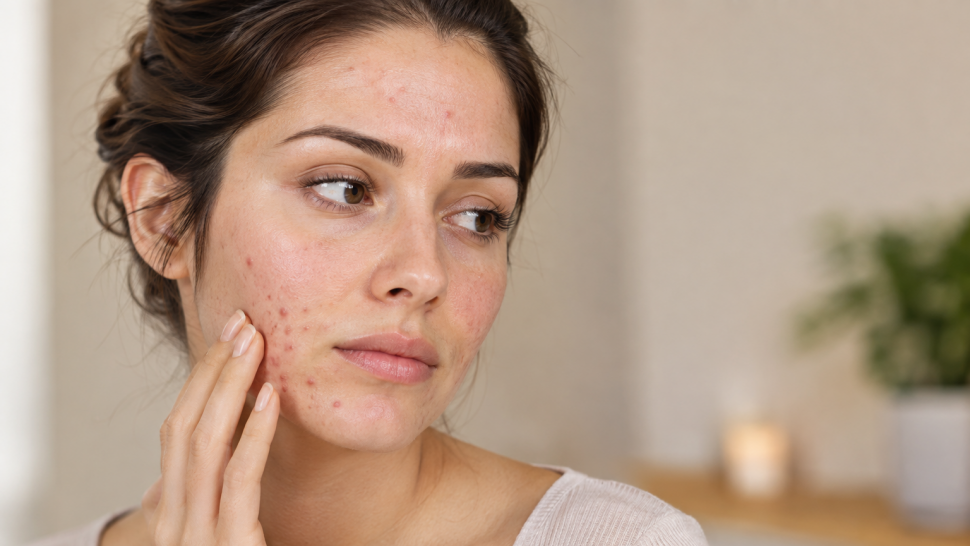

Acne can be frustrating for one simple reason: you think you've finally gotten it under control, and then another breakout appears. A few pimples disappear, your skin looks better for a while, and suddenly you're dealing with the same problem again. If this sounds familiar, you're not alone. Recurring acne is common among teenagers and adults, and it doesn't necessarily mean you're doing something wrong.
The real issue is often deeper than an occasional blemish. Acne develops when oil, dead skin cells, bacteria, and inflammation interact inside the hair follicles. If the conditions that trigger those processes remain unchanged, acne keeps coming back even after individual pimples have healed.
Understanding what's behind persistent breakouts is the first step toward managing them more effectively.
Why Does Acne Keep Coming Back?
Acne usually returns because the underlying factors causing breakouts haven't been addressed. Treating a visible pimple may reduce inflammation temporarily, but it doesn't always prevent new clogged pores from developing.
Several factors can contribute to recurring acne, including excess oil production, hormonal changes, unsuitable skincare products, irritation, stress, and certain medications. For some people, there may also be a genetic tendency toward acne-prone skin.
Another common problem is stopping treatment as soon as the skin looks clear. Acne-prone skin often needs consistent maintenance rather than occasional treatment only when a breakout appears.
Your Pores May Still Be Getting Clogged
One of the most basic causes of recurring acne is continued pore congestion.
Dead skin cells don't always shed evenly. When they mix with excess sebum, they can accumulate inside follicles and create comedones. These clogged pores can eventually become inflamed, leading to whiteheads, blackheads, or deeper pimples.
That's why you may notice new acne breakouts appearing in different areas even though an older blemish has already disappeared. The previous pimple may be gone, but other clogged follicles are developing underneath the surface.
Hormones Can Play a Major Role
Hormonal fluctuations are another common reason for persistent acne, particularly in adults.
Androgens can increase sebum production, making the skin oilier and more susceptible to clogged pores. Hormonal changes can occur during puberty, around menstrual cycles, pregnancy, or other periods of hormonal fluctuation.
Adult acne may also appear after years of relatively clear skin. For some women, breakouts tend to develop around the chin, jawline, and lower face, although acne patterns vary from person to person.
If breakouts consistently follow a hormonal pattern or suddenly become significantly worse, it's worth discussing the situation with a qualified healthcare professional rather than assuming it's simply a skincare problem.
Your Skincare Routine Could Be Irritating Your Skin
More skincare doesn't necessarily mean better skin.
Using too many exfoliants, scrubs, acne treatments, or strongly fragranced products can irritate the skin barrier. Once the skin becomes irritated, redness and sensitivity may increase, making existing acne appear worse and making it harder for the skin to tolerate treatment.
This is particularly relevant when you're trying several products at once. If your skin suddenly becomes dry, tight, burning, or unusually sensitive, the problem may be over-treatment rather than insufficient treatment.
A simpler routine is often easier to manage:
Use a gentle cleanser appropriate for your skin type.
Choose non-comedogenic moisturizers and cosmetic products where possible.
Apply sunscreen during the day.
Avoid aggressive scrubbing or repeatedly picking at blemishes.
Introduce new acne products gradually rather than adding several at once.
Good skincare for acne-prone skin is about consistency and tolerance, not creating the most complicated routine possible.
Stress and Lifestyle Can Influence Breakouts
Stress isn't necessarily the sole cause of acne, but it can contribute to flare-ups. Changes in hormones and inflammatory responses associated with stress may affect oil production and the skin's ability to recover.
Sleep patterns, diet, exercise, and daily habits can also influence how your skin behaves. That doesn't mean every breakout is caused by something you ate or that there is a single "acne diet." Acne is more complicated than that.
A useful approach is to look for patterns rather than blaming individual foods or habits. If your acne repeatedly worsens during particular periods, keeping a simple skin diary may help identify possible triggers.
Are You Treating the Pimple Instead of the Acne?
This is one of the biggest differences between short-term and long-term acne management.
Putting a spot treatment on a new pimple can be useful, but acne doesn't begin when you can see the blemish. The process leading to a breakout can start before the spot becomes noticeable.
Think of it like a series of clogged follicles developing at different stages. Treating only the visible ones means other developing breakouts may still appear later.
For people dealing with recurring acne, a consistent treatment strategy is generally more useful than repeatedly reacting to individual pimples.
Acne Can Also Be Caused by the Products You Use
Hair products, makeup, moisturizers, sunscreen, and styling products can sometimes contribute to clogged pores, especially when they regularly come into contact with acne-prone areas.
This doesn't mean you need to stop using cosmetics or skincare altogether. Instead, look at what you're applying, where you're applying it, and how your skin responds.
For example, someone experiencing small bumps around the forehead may want to consider whether hair oils, conditioners, styling products, hats, or other sources of contact could be contributing to congestion.
Why Picking Acne Often Makes Things Worse
It's tempting to squeeze a pimple when it looks ready to disappear. Unfortunately, picking can push inflammation deeper into the surrounding tissue and damage the skin.
The immediate result may look satisfying, but the longer-term result can include increased redness, prolonged healing, post-inflammatory marks, and sometimes scarring.
If you're dealing with frequent acne breakouts, the goal should be to reduce the cycle of inflammation rather than repeatedly manipulating individual spots.
When Should You Consider Professional Acne Treatment?
If acne continues despite a consistent home routine, becomes painful, leaves dark marks or scars, or significantly affects your confidence, professional guidance may be worthwhile.
A skincare professional can assess your skin more closely and determine whether the issue involves clogged pores, excess oil, irritation, inflammation, or a combination of factors.
For people looking for acne facial Herndon VA services, a professional skin assessment can also help determine which facial or skincare approach is appropriate for the condition of the skin. Facials may support cleansing and skin maintenance, but persistent or severe acne may require medical evaluation and treatment from a dermatologist.
That's an important distinction. A facial isn't a substitute for medical acne care when acne is severe, painful, cystic, or scarring.
Natural and Organic Acne Treatment: What Should You Know?
Interest in natural acne treatment and organic acne treatment has grown, particularly among people who want gentler skincare options.
Natural doesn't automatically mean non-irritating, though. Essential oils, botanical extracts, and other naturally derived ingredients can still cause irritation or allergic reactions in some people.
The same principle applies to organic skincare. An organic label doesn't guarantee that a product will work for acne or suit your particular skin type.
Instead of choosing a product simply because it's labeled "natural" or "organic," look at the actual ingredients, how your skin reacts, and whether the product is appropriate for acne-prone skin.
A Better Approach to Recurring Acne
If your acne keeps coming back, start by looking at the bigger picture rather than changing products every few days.
1. Keep Your Routine Consistent
Give a reasonable amount of time for a skincare routine to show whether it's helping. Constantly switching products makes it difficult to determine what's working.
2. Avoid Over-Cleansing
Washing your face excessively or using harsh scrubs won't necessarily prevent acne. It can leave the skin irritated and uncomfortable.
3. Check Your Products
Review makeup, moisturizers, sunscreen, hair products, and other products that regularly touch your face. Choose products that are suitable for acne-prone skin.
4. Don't Pick or Squeeze
Allow blemishes to heal without repeatedly touching them. This can reduce unnecessary inflammation and the risk of marks and scarring.
5. Get Professional Advice When Needed
If breakouts are persistent, painful, widespread, or leaving scars, professional evaluation can help identify the most appropriate treatment approach.
FAQs
Why does my acne keep coming back in the same place?
Repeated breakouts in the same area may occur because the follicles there are particularly prone to clogging or because the underlying trigger hasn't changed. Hormonal acne, hair products, friction, and repeated irritation can all play a role depending on the location.
Can clogged pores cause recurring acne?
Yes. Clogged pores and acne are closely connected. When excess oil and dead skin cells accumulate inside follicles, they can create blockages that develop into inflammatory acne.
Does adult acne eventually go away?
Adult acne can improve over time, but there isn't a guaranteed age when it disappears. Hormonal changes, genetics, medications, skincare habits, and other factors can influence how long it continues.
Is a facial enough to treat persistent acne?
A facial may help with cleansing and general skin maintenance, but it isn't appropriate as the only treatment for everyone. Painful, deep, cystic, or scarring acne should be evaluated by a qualified medical professional.
How can I prevent future acne breakouts?
Prevention usually involves consistent skincare, avoiding unnecessary irritation, using suitable products, addressing individual triggers, and following an appropriate acne treatment plan. The best approach depends on the type and severity of your acne.
The Bottom Line
Recurring acne isn't simply a sign that you're not washing your face enough. Persistent acne can result from clogged pores, hormones, skin irritation, product choices, genetics, stress, and several factors working together.
The most useful shift is to stop thinking only about the pimple you can see and start considering why new ones continue to form. A consistent skincare routine, careful product selection, and professional guidance when necessary can make a much bigger difference than constantly chasing individual breakouts.
If you're dealing with acne that repeatedly returns, the goal isn't just clearer skin today. It's understanding what's driving the cycle so you can manage acne-prone skin more effectively over time.



Share the News