

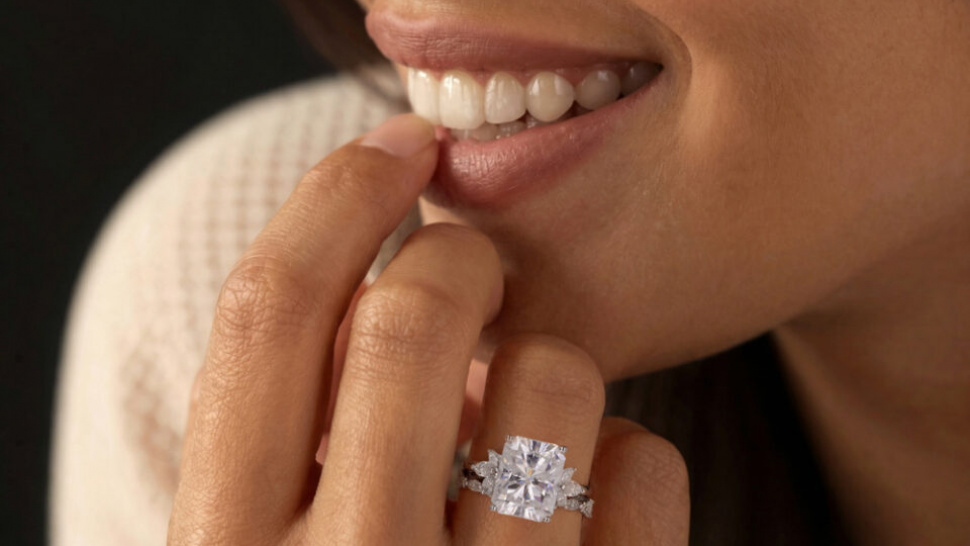

Diamond jewelry no longer depends entirely on stones formed deep beneath the earth. Advances in laboratory technology now allow gem-quality diamonds to grow under controlled conditions, giving shoppers another option for engagement rings, earrings, pendants, and other fine pieces.
One of the most widely used production methods is chemical vapor deposition, usually shortened to CVD. For buyers researching diamante cvd, understanding the growth process and the finished stone matters more than the technical name alone.
The Science Behind a CVD Diamond
CVD diamond growth begins with a thin diamond seed placed inside a vacuum chamber. The chamber contains gases rich in carbon, commonly including methane and hydrogen. Energy activates those gases, allowing carbon atoms to settle gradually onto the seed and form diamond crystal.
According to the Gemological Institute of America, CVD growth takes place at lower pressures than the older high-pressure, high-temperature process. The crystal may require several growth cycles before reaching the desired size.
The result is not a diamond imitation such as cubic zirconia. A laboratory-grown diamond has essentially the same optical, physical, and chemical properties associated with mined diamond material. The difference lies primarily in its origin.
Appearance Still Depends on Quality
A CVD origin does not automatically determine whether a finished diamond looks attractive. Cut, color, clarity, and carat weight still shape its appearance and value.
A well-cut stone can return light effectively and create strong brilliance. Poor proportions may make another diamond appear dull, even when its color and clarity grades seem impressive on paper.
Some CVD-grown stones also receive treatments after growth. GIA reports that many laboratory-grown diamonds produced through CVD undergo HPHT treatment to improve their color.
That makes an independent grading report useful when comparing stones. Buyers can review characteristics rather than relying only on photographs, product names, or marketing descriptions.
CVD and HPHT Are Different Production Methods
CVD is sometimes confused with HPHT because both produce lab made diamonds. Their growth environments, however, are different.
HPHT recreates intense pressure and heat conditions similar to those associated with natural diamond formation. CVD instead deposits carbon onto a diamond seed inside a controlled chamber.
Neither method automatically produces a better-looking finished gemstone. Crystal quality, post-growth treatment, cutting precision, and grading all affect the final result.
Modern testing can also distinguish laboratory-grown stones from natural diamonds. GIA notes that advanced instruments and analysis are often required because colorless laboratory-grown material can share many gemological properties with natural stones.
What Buyers Should Check Before Purchasing
A grading report should be one of the first details to review for a significant jewelry purchase. Confirm the carat weight, measurements, color grade, clarity grade, and information about laboratory origin or treatments.
The seller should also describe the diamond accurately. In the United States, Federal Trade Commission guidance says laboratory-created diamonds should be clearly identified as laboratory-grown, laboratory-created, or with wording that communicates they are not mined stones.
For a diamante cvd, compare more than the headline grade. Look at the stone's proportions, visible inclusions, setting quality, return policy, warranty terms, and grading documentation.
Price deserves similar attention. Laboratory-grown diamond prices can behave differently from mined diamond prices, so jewelry should be purchased primarily for enjoyment rather than assumptions about future resale value.
Choosing Jewelry for Real-Life Wear
The setting matters almost as much as the center stone. Prong settings expose more of a diamond to light, while bezel settings surround the edge with metal and can provide added protection for active wear.
Metal choice also affects the finished look. White gold and platinum create a cooler appearance, while yellow or rose gold provides stronger contrast around a colorless stone.
For earrings or multi-stone designs, matching proportions and visual appearance can matter more than tiny differences between individual clarity grades. A balanced pair often looks better than two stones chosen only by certificate numbers.
A More Informed Diamond Purchase
CVD technology has expanded the choices available to jewelry buyers without changing the need for careful comparison. A beautiful diamond still depends on cut quality, appropriate grading, honest disclosure, and a setting suited to the person wearing it.
Shoppers considering diamante cvd should focus on documented quality rather than production terminology alone. As lab made diamonds become more common in fine jewelry, understanding origin, treatment, grading, and craftsmanship makes it easier to judge what offers genuine value.



Share the News