

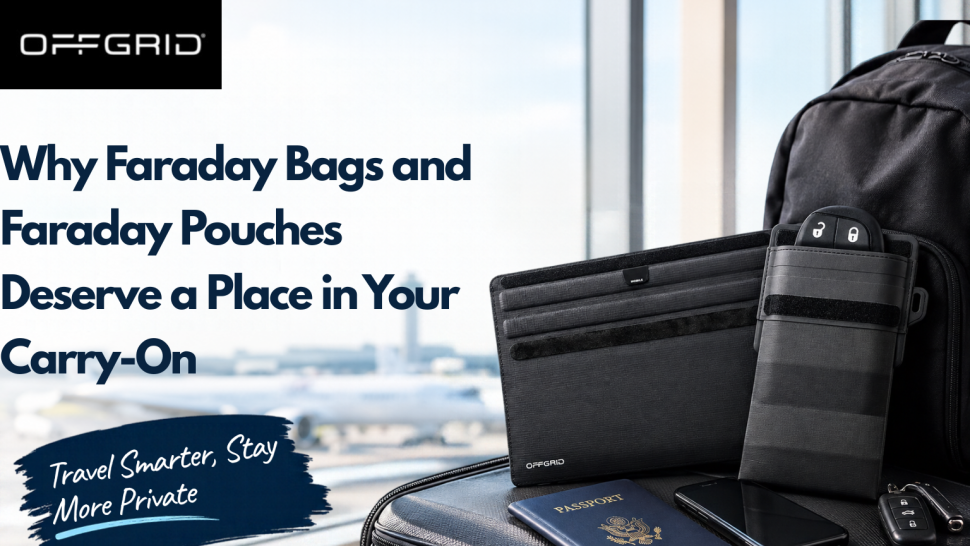

Traveling today means carrying more than clothes, travel documents, and everyday essentials. Most travelers also bring smartphones, wireless car keys, tablets, and other electronic devices that keep them connected throughout their journey. While these gadgets make traveling easier, they can also raise questions about digital privacy and wireless security. This is where Faraday bags and Faraday pouches can become useful additions to your travel gear.
Whether you are preparing for a business trip, a family vacation, or a weekend getaway, choosing the right accessories can help you travel with greater peace of mind. Offgrid offers privacy-focused solutions designed for people who want more control over their devices while on the move.
What Are Faraday Bags and Faraday Pouches?
Faraday bags and Faraday pouches are designed to block wireless signals from reaching or leaving compatible electronic devices when properly enclosed. They use conductive shielding materials that help reduce or prevent communication through supported radio frequencies.
Depending on the product's design and tested performance, a Faraday bag may block cellular, Wi-Fi, Bluetooth, GPS-related signals, or other wireless communications. However, not every product blocks every frequency equally well, so checking the manufacturer's specifications is important.
A Faraday pouch serves a similar purpose in a smaller, more compact format. It is particularly convenient for carrying individual items, such as a smartphone or compatible vehicle key fob.
For travelers who want an extra layer of control over wireless connectivity, these accessories offer a practical option without requiring complicated equipment.
Why Should You Pack Faraday Bags in Your Carry-On?
Your carry-on usually contains the items you want to keep close and accessible during your journey. It makes sense to consider how you store and manage your electronics, especially when moving through busy airports, hotels, rental car facilities, and unfamiliar destinations.
1. Take Greater Control of Your Phone's Wireless Connectivity
Smartphones constantly interact with wireless networks and nearby devices when their corresponding features are enabled. Travelers who want to limit these communications in certain situations may consider using a properly tested Faraday bag.
For example, you might want to isolate a compatible phone during a period when you do not need calls, messages, or wireless connectivity. Placing the device inside an effective Faraday bag can help prevent supported wireless signals from reaching or leaving it.
This is different from simply locking your phone or closing an app. A screen lock protects access to the device, while a Faraday bag is intended to restrict wireless communication through physical shielding.
Keep in mind that signal blocking is not a substitute for strong passwords, software updates, or responsible security practices. It is an additional option for managing connectivity.
2. Protect Your Car Keys While Traveling
Many modern vehicles use wireless key fobs that communicate with the car to support convenient entry and starting. Depending on the vehicle, these systems may be vulnerable to certain relay attacks, in which criminals attempt to extend communication between a key and a vehicle.
A properly tested Faraday pouch for your key fob can help reduce this risk by blocking the relevant radio signals while the key is enclosed.
This can be especially useful when you leave your car parked at an airport, hotel, or other travel destination. It can also provide a convenient place to store your keys when they are not in use.
Not all vehicle systems work in the same way, and a Faraday pouch is not a guarantee against every type of vehicle theft. Test the pouch with your actual key fob before relying on it, and follow your vehicle manufacturer's security recommendations.
3. Add a Practical Layer of Digital Privacy
Digital privacy is not only a concern at home or in the office. Travel often involves unfamiliar networks, shared spaces, and busy public environments.
A Faraday bag can help when you deliberately want to isolate a compatible device from supported wireless communications. For example, someone carrying sensitive work equipment may appreciate having a dedicated place to store a device when wireless access is unnecessary.
However, it is important to understand what this protection does and does not provide. A Faraday bag does not encrypt files, remove malware, or protect a device against every form of digital attack. Its primary function is signal isolation, not comprehensive cybersecurity.
Combining signal-blocking accessories with secure device settings and good digital habits offers a more sensible approach to privacy.
Faraday Bag vs. Faraday Pouch: Which One Is Better for Travel?
Both options can be useful, but the right choice depends on the devices you carry and how you plan to use them.
Faraday Bags for Larger or Multiple Devices
Faraday bags are available in different sizes and configurations. Depending on the model, they may accommodate a smartphone, tablet, or other compatible electronics.
They can be useful for travelers who want a dedicated storage solution for one or more devices. Before buying, check the internal dimensions and confirm that the shielding is designed for the frequencies you want to block.
A larger bag is not automatically more effective than a smaller pouch. Performance depends on the shielding materials, construction, closures, and overall product design.
Faraday Pouches for Compact Everyday Carry
A Faraday pouch is a convenient option for smaller items, particularly car key fobs and smartphones that fit its dimensions.
Its compact design makes it easy to keep inside a backpack, handbag, laptop bag, or carry-on organizer. It can also help keep a key fob separate from other belongings.
If you are shopping for a farady pouch, pay attention to its size, closure, intended use, and signal-blocking performance. A pouch that fits your device comfortably and seals correctly is more useful than one chosen on appearance alone.
Can You Carry Both?
Absolutely. If you travel with both a smartphone and a wireless car key, carrying a suitable Faraday bag and a separate Faraday pouch may make sense.
You can choose a bag for your phone or other compatible electronics and a smaller pouch for your vehicle key. This arrangement gives you flexibility without forcing every item into one storage solution.
The most important consideration is selecting products that suit your devices and testing them before your trip.
How to Choose the Right Faraday Bag or Pouch for Your Carry-On
Not all signal-blocking products are made for the same purpose. A few simple checks can help you choose a product that fits your travel routine.
Consider the Size of Your Devices
Start by identifying what you want to store. A pouch designed for a car key may not accommodate a smartphone, while a larger bag may take up unnecessary space if you only need to carry one small item.
Check the usable interior dimensions rather than relying only on the product's exterior measurements.
Check the Signal-Blocking Claims
Look for clear information about the frequencies tested and the conditions under which the product was evaluated. Claims such as complete signal blocking should be supported by meaningful testing.
Different devices use different wireless technologies, so a product that blocks one type of signal may not perform equally well across all others.
Pay Attention to the Closure
The closure is an important part of the shielding system. Gaps, improper folding, wear, or damage can affect performance.
Choose a design that is easy to close correctly and inspect it periodically for damage. Follow the manufacturer's instructions for proper use.
Choose a Travel-Friendly Design
Your carry-on already has limited space, so lightweight construction and a practical shape can make a difference. Consider how easily the product fits into your existing luggage and whether you can access your devices when needed.
For frequent travelers, a durable, easy-to-use design is often more valuable than unnecessary extra features.
Are Faraday Bags Allowed in Carry-On Luggage?
Travelers naturally want to know whether signal-blocking accessories can be packed for a flight.
A Faraday bag or pouch is generally an ordinary storage accessory, but airline rules and security screening requirements can vary. If you are carrying electronic devices, follow the airline's current baggage rules and any instructions from airport security personnel.
Remember that placing a phone inside a Faraday bag does not turn off its battery or remove restrictions that apply to the device itself. Battery safety rules, particularly those covering spare lithium batteries and power banks, still apply.
It is also worth considering practical issues during your journey. A phone inside an effective Faraday bag may not receive calls, messages, or other supported wireless communications until it is removed. Keep essential travel information accessible and avoid isolating a device when you need it for boarding updates, emergency communication, or navigation.
For international trips, check the requirements of your airline and departure airport before traveling.
Common Mistakes to Avoid When Using Faraday Bags
Even a well-made product can disappoint if it is used incorrectly. Avoid these common mistakes to get more value from your travel accessories.
Assuming every bag blocks every signal: Performance depends on the product's design and testing. Review the manufacturer's specifications instead of relying on a general label.
Skipping the signal test: Before traveling, place the intended device inside the closed bag and test the relevant wireless functions from outside. For a phone, try calling it and checking the supported connections. For a car key, follow the manufacturer's recommended procedure to check whether the vehicle responds to the enclosed key. Results depend on the device and testing environment, so no single test proves protection against every frequency or attack.
Ignoring wear and tear: Damaged shielding materials or closures may reduce effectiveness. Inspect your bag or pouch regularly.
Expecting complete cybersecurity: Signal blocking does not replace device encryption, strong authentication, software updates, or safe browsing habits.
Forgetting that an isolated phone may be unreachable: If you need to receive a boarding notification or emergency call, remove the device from the bag or pouch when appropriate.
Why Consider Offgrid for Your Travel Privacy Accessories?
When choosing travel accessories, it helps to look for products designed around practical everyday needs. Offgrid focuses on privacy-oriented products for people who want more control over their electronic devices and wireless connectivity.
Whether you are looking for Faraday bags for compatible electronics or a Faraday pouch for your car keys, consider your intended use, device dimensions, closure design, and the product's tested performance before making a purchase.
You can explore the available options at Offgrid.co and choose accessories that fit your travel routine.
The goal is not to make travel more complicated. It is to give yourself practical options for managing your devices when wireless communication is unnecessary.
Final Thoughts
Travel privacy starts with understanding your devices and making practical choices about how you use them. Faraday bags and Faraday pouches offer travelers an additional way to manage wireless connectivity, protect compatible key fobs from certain relay-based threats, and keep their electronics organized.
The best solution depends on what you carry, which signals you want to block, and how the product performs under real-world conditions. Choose carefully, test your accessories before departure, and continue following good digital security practices.
With the right travel essentials from Offgrid, you can build a carry-on setup that supports convenience, organization, and greater control over your connected devices wherever your journey takes you.
Frequently Asked Questions
1. What is the purpose of carrying a Faraday bag while traveling?
A Faraday bag is designed to block supported wireless signals when a compatible device is properly enclosed. Travelers may use one when they want to isolate a phone or another electronic device from wireless communication.
2. What is the difference between Faraday bags and Faraday pouches?
Faraday bags are available in various sizes for different electronics, while Faraday pouches are often smaller and designed for individual items such as car key fobs or smartphones. Their actual capabilities depend on their construction and tested performance.
3. Can a Faraday pouch help protect car keys from relay theft?
A properly tested Faraday pouch can block the relevant radio signals from a compatible key fob while it is enclosed. This may help reduce exposure to certain relay attacks, but it cannot guarantee protection against all vehicle theft methods.
4. Will my phone work inside a Faraday bag?
Wireless functions that rely on signals blocked by the bag may stop working while the phone is enclosed. Depending on the bag and device, calls, mobile data, Wi-Fi, Bluetooth, and other connections may be affected. Signal blocking varies by product and frequency.
5. Can I put a Faraday pouch inside my carry-on backpack?
Yes. A Faraday pouch can generally be stored inside a carry-on backpack or handbag. Make sure the device fits correctly, the pouch closes as intended, and all applicable airline and airport security rules are followed.
6. Do Faraday bags protect personal information from hackers?
Faraday bags can help isolate devices from supported wireless communications, but they do not encrypt stored data or remove malware. Use them alongside strong passwords, device encryption, security updates, and other sensible cybersecurity practices.
7. How can I check whether my Faraday pouch works?
Follow the manufacturer's testing instructions and test the specific device and wireless functions you want to block. For a car key, check whether the vehicle responds to the enclosed key using a safe, manufacturer-recommended procedure. Repeat tests as needed and inspect the pouch for damage.



Share the News