

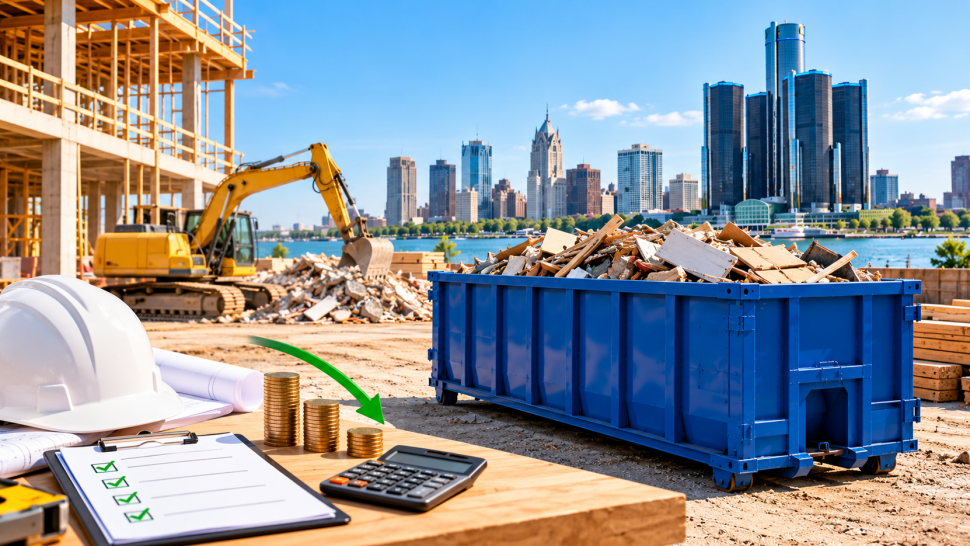

Construction waste disposal is often treated as a routine project expense. However, poor planning can lead to unnecessary container exchanges, additional hauling charges, and delays when a dumpster fills before the next scheduled pickup.
For contractors comparing dumpster rental services in Michigan, controlling costs begins before the container arrives.
The most effective approach is to estimate waste accurately, choose the right container, and coordinate disposal with the construction schedule.
1. Estimate Waste Before Selecting a Dumpster
Choosing a dumpster without understanding the expected debris can lead to paying for unused capacity or arranging additional hauls.A small renovation may need a 10-yard container, while a kitchen remodel or roofing project may require a 20-yard dumpster. Larger renovations and new construction may justify 30- or 40-yard options.
Before booking a dumpster rental for construction, identify the main waste materials and estimate how much each project phase will produce.
Remember that heavy materials can reach weight limits before the container is full.
2. Plan Pickups Around Construction Milestones
Construction waste rarely accumulates at the same rate throughout a project.
Demolition may generate substantial debris over a few days, while finishing work produces smaller amounts over a longer period.
For a dumpster rental for new home construction, pickup planning should reflect these differences.
For example, contractors might arrange collection after framing and before drywall installation begins.
This helps keep disposal space available when new materials start accumulating.
3. Avoid Paying for More Capacity Than You Need
A larger container isn't always the most economical choice.
A 40-yard dumpster may be appropriate for bulky debris from major construction, but it could be unnecessary for a small residential renovation.
Similarly, a smaller container may work better when site access is limited or waste is generated gradually.
When comparing construction dumpster rental cost, evaluate the total number of expected hauls rather than the price of one container.
The goal is to find a practical balance between capacity and collection frequency.
4. Separate Materials That Need Special Disposal
Mixing unsuitable materials into a construction dumpster can create additional expenses and disposal complications.
Hazardous chemicals, asbestos-containing materials, certain batteries, and other regulated waste may require specialized handling.
Concrete, brick, and dirt may also be subject to separate acceptance and weight restrictions.
For a dumpster rental for construction debris, confirm which materials are allowed before work begins.
Give subcontractors clear loading instructions so prohibited materials don't enter the container accidentally.
5. Keep the Dumpster Accessible Throughout the Project
Poor container placement can create avoidable problems.
A dumpster positioned too close to construction equipment may block access. A container placed beneath overhead obstacles may complicate pickup.
Before delivery, confirm that the location provides adequate space for the container and collection vehicle.
This is especially important for a residential construction dumpster, where driveways and work areas may be restricted.
6. Compare the Complete Rental Terms
A low initial quote doesn't always mean lower overall disposal costs.
When reviewing dumpster rental Michigan options, ask whether pricing includes delivery, pickup, disposal, and a specified rental period.
Also confirm potential charges for excess weight, extended rentals, and additional hauls.
Understanding these terms helps contractors budget for waste removal throughout the project.
Build Waste Removal Into Your Construction Plan
An effective new construction dumpster rental plan considers the work schedule, debris characteristics, and available site space.
Contractors should estimate waste before each major phase, communicate loading restrictions, and arrange collection before containers become full.
For temporary construction projects, roll-off dumpster rental services are generally more suitable than recurring commercial trash collection.
For completed commercial properties requiring regular waste removal, commercial dumpster rental services provide a different arrangement.
When you rent a dumpster for construction, thoughtful planning can help control disposal costs while keeping the job site organized and work moving.



Share the News