


What Are the 5 Basic Food Safety Rules? A Practical Guide for Home Cooks and Food Businesses
Most food poisoning doesn't come from a dramatic kitchen disaster. It comes from a cutting board that didn't get washed between chicken and salad, or a casserole left on the counter during a long conversation. Ordinary habits cause most of the trouble, which is also why ordinary habits fix it.
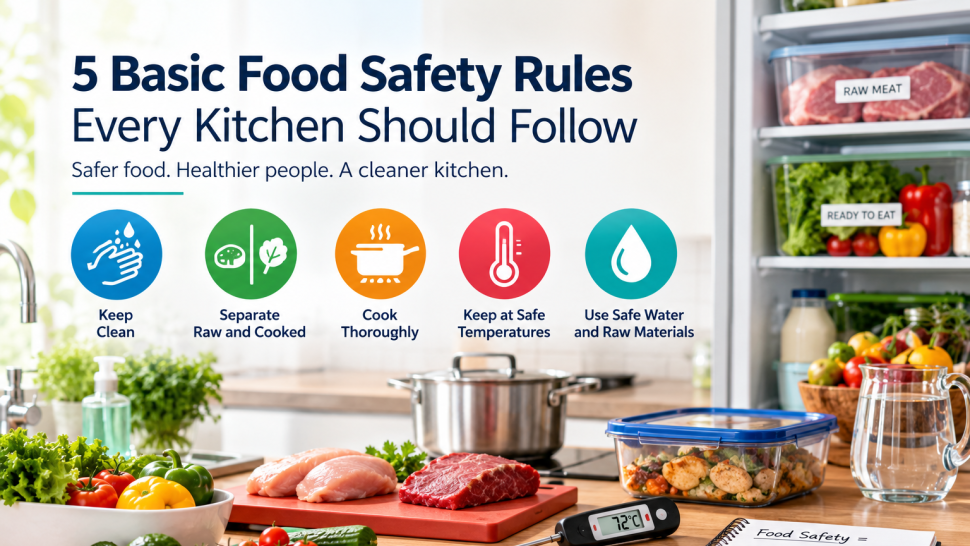
If you've wondered what the 5 basic food safety rules are, the most widely used answer comes from the World Health Organization. Its Five Keys to Safer Food are to keep clean, separate raw and cooked, cook thoroughly, keep food at safe temperatures, and use safe water and raw materials. Here's what each one means in a real kitchen.
What Food Safety Actually Means
Food safety is the set of habits that stop harmful bacteria, viruses, parasites and chemicals from reaching your plate. It covers how food is bought, stored, prepared, cooked, cooled and served. Food hygiene, the cleanliness side of the equation, is one part of it. Temperature control, cross-contamination prevention and ingredient quality are the others.
Why It Matters
Foodborne illness ranges from an unpleasant day to a hospital stay, and children, older adults, pregnant people and anyone with a weakened immune system face higher risk. For a business, one incident can damage a reputation that took years to build. For a household, it can ruin a family gathering. The rules below cost almost nothing to follow.
The 5 Basic Food Safety Rules
1. Keep Clean
Wash your hands before handling food, often during preparation, and after using the toilet, handling pets or touching your phone. Clean and sanitize counters, knives and boards. Protect your kitchen from pests. Sponges and dishcloths deserve attention too, since they hold moisture and bacteria better than almost anything else in the room. Replace them often or run them through a hot wash.
2. Separate Raw and Cooked Food
Raw meat, poultry, seafood and eggs can carry bacteria that spread to ready-to-eat food through juices, hands or shared tools. Use different boards and knives, or wash them thoroughly between tasks. In the fridge, store raw meat on the lowest shelf so nothing drips onto food above it.
The same principle applies when you sell or gift food. Finished baked goods should be boxed in clean, covered containers, away from raw ingredients and cleaning supplies. Small bakeries often find that bulk bakery boxes simplify this step, since sealed cartons keep products protected from dust, handling and stray contact between orders. If you use packaging for this purpose, ask your supplier to confirm the material is intended for food contact, and store unused boxes off the floor in a dry, closed space.
3. Cook Thoroughly
Heat kills most harmful microorganisms, but only when food gets hot enough all the way through. The WHO suggests that cooking to 70°C (about 158°F) helps make food safe. A food thermometer is the dependable way to check, because color alone can mislead. Reheat leftovers thoroughly, too. Soups and sauces should be steaming throughout, not just warm at the edges.
4. Keep Food at Safe Temperatures
Bacteria multiply fastest between roughly 5°C and 60°C (about 41°F to 140°F). WHO guidance says cooked food shouldn't sit at room temperature for more than two hours, perishable food should go into the refrigerator promptly, and hot food should stay above 60°C until served. Don't thaw frozen food on the counter. Use the fridge, cold water, or the microwave if you're cooking right away.
5. Use Safe Water and Raw Materials
Wash fruits and vegetables, check expiry dates, and buy from suppliers you trust. If your tap water's quality is uncertain, boil or treat it. Throw out anything that smells wrong, looks damaged, or has been stored too long, even if it's technically within date.
Key Benefits of Following These Rules
Consistent habits protect health first, but they also reduce food waste, because properly stored food lasts longer. For businesses, they support inspections, build customer trust, and cut the cost of returns and refunds. They also make training easier, since five clear principles are simple to teach new staff.
Common Challenges
Time pressure. Busy kitchens skip handwashing and sanitizing first. Build these steps into the workflow instead of treating them as extras.
Guessing temperatures. Many people rely on their feelings. A thermometer costs little and removes the guesswork.
Cross-contamination in small spaces. Shared counters and crowded fridges make separation harder. Color-coded boards and clear shelf zones help.
Party and event food. Buffets and potlucks keep food out for hours. Serve smaller batches and refill them rather than leaving everything out.
Best Practices
Label and date everything you store. Use the first-in, first-out method so older stock gets used first. Cool large batches quickly by splitting them into shallow containers. Keep a written cleaning schedule if you run a business, and check fridge temperatures daily. The WHO's Five Keys to Safer Food manual is a clear, free reference that works well for staff training.
Expert Tips
Wash hands for at least 20 seconds with soap. Quick rinses miss most of the surface.
Don't rinse raw chicken. Splashing spreads bacteria around the sink and counters.
Cool leftovers within two hours, and eat them within a few days.
Keep a thermometer in the fridge. The dial setting doesn't always match the real temperature.
When in doubt, throw it out. A few dollars of food isn't worth a week of illness.
Real-Life Application
Picture a home baker taking weekend orders for cakes and filled pastries. She washes her hands and sanitizes surfaces before each batch, keeps dairy-filled items refrigerated until pickup, and uses a probe thermometer for custards. Finished orders go into clean, sealed boxes labeled with the date and any allergens. Nothing about this is complicated, yet it covers all five rules, and customers notice the care.
Factors to Consider Before You Start
Think about who you're feeding, since vulnerable guests need extra caution. Consider your kitchen setup, your equipment, how long food will sit before serving, and your local regulations. If you sell food, check your area's licensing and inspection requirements, because rules vary by location and can change.
Making Safe Food a Habit
The five rules come down to a simple pattern: stay clean, keep raw and cooked food apart, cook it through, hold it at the right temperature, and start with good ingredients. None needs special training, and each one works better as a routine than as something you remember at the last minute. Choose one habit to tighten this week, perhaps a thermometer or a labeled fridge shelf, and the rest tend to follow.
21:32:30 query returned open=false
21:38:59 dblclick "bulk bakery boxes" sidepanelOpen=false autoUpdate=true isAdv=false
21:39:32 dblclick "Five Keys to Safer Food manual" sidepanelOpen=false autoUpdate=true isAdv=false



Share the News