

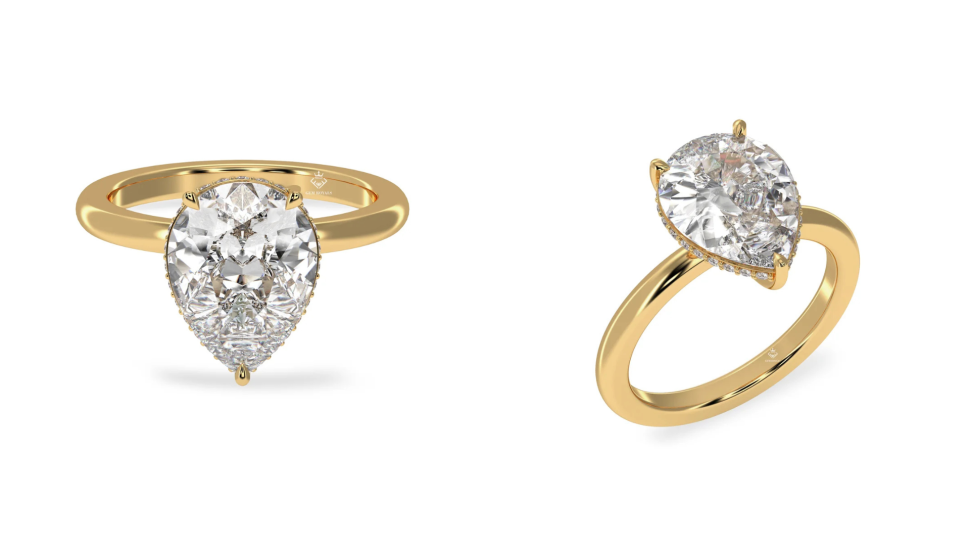

You've pinned forty rings, opened twelve tabs, and now one number keeps nagging you: the price of a 2 ct engagement ring . Maybe it felt like sticker shock. Maybe it felt like too many choices with no clear map. Either way, the fear of overpaying is real, and it's completely normal.
We've spent years helping shoppers sort through certificates, settings, and sparkle. The good news is that a 2 carat ring becomes far less intimidating once you know which decisions really move the price. Let's walk through them together, one practical step at a time.
Two Carats, Explained: Weight vs. What You'll Actually See
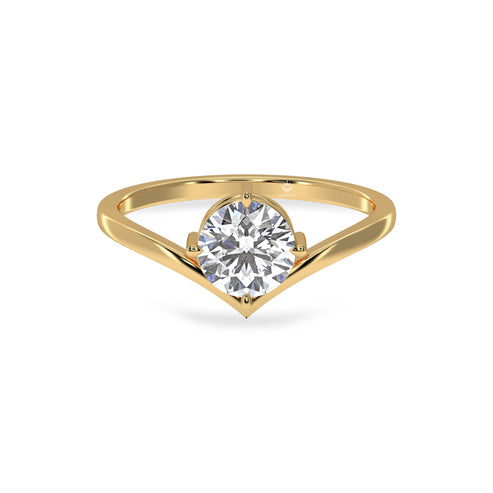
Carat measures weight, not width. One carat equals 200 milligrams, so a two-carat diamond ring holds a stone weighing about 0.4 grams. How big it looks depends on cut and shape. A well-cut round at this weight typically measures around 8 mm across, while ovals, pears, and marquise shapes spread their weight over the top and often look larger face-up.
How it sits on different hands
Finger size changes the story. On a slender finger, a 2 carat solitaire can look bold and dramatic. On a broader finger, the same stone reads balanced and classic. Neither is better, so try on a few shapes before you fall for a photo.
Why the 2 CT Engagement Ring Keeps Its Fan Club
It lands in a comfortable middle: clearly noticeable, yet not so large that it feels impractical. Shoppers often tell us they want a ring that makes a statement but still survives typing, cooking, and the occasional pair of gloves. Two carats deliver that for many people, and it photographs beautifully too.
Planning Your Budget Without the Guesswork
The 4Cs: where to spend and where to save
- Cut: Spend here first. Cut grade shapes brilliance more than any other factor, and GIA grades round brilliants from Excellent to Poor. In our experience, a well-cut stone with slightly lower color usually outshines a poorly cut “better” one.
- Color: The scale runs from D (colorless) to Z. Many shoppers find G to I looks bright and white once set, though larger stones show tint more easily than small ones.
- Clarity: The scale runs from Flawless to Included. VS2 to SI1 stones are often eye-clean, but check where inclusions sit. A flaw near the center is easier to spot than one near the edge.
- Carat: Prices tend to jump at round numbers. A 1.90 ct stone can look nearly identical to a 2.00 ct one, often at a gentler price.
Natural or lab-grown?
Both are real diamonds, chemically and optically. Lab-grown stones typically cost far less, which can mean a bigger or higher-quality diamond for the same budget. Natural diamonds offer rarity and tend to hold resale value better. It's a personal call, and neither answer is wrong.
Metal, setting, and paperwork
Platinum is dense, durable, and naturally white, and it usually costs more than 14k or 18k gold. Settings with extra stones, like halos and pavé, add labor and cost. Whatever you choose for your 2 ct engagement ring, ask for an independent grading report from GIA or IGI so you know exactly what you're buying.
Styles Worth Trying On
- Solitaire: Timeless, lets the stone lead, and is the easiest style to clean.
- Halo: A ring of small diamonds frames the center and adds sparkle, sometimes making the stone look larger.
- Three-stone: Side stones add symbolism and presence, and they shift the look from minimalist to ceremonial.
- Hidden halo: Small diamonds tucked beneath the center stone give a subtle flash from the side.
- Vintage-inspired: Milgrain, filigree, and engraved details for a storybook feel.
- East-west: An oval or emerald cut set horizontally, a modern twist on the classic.
Your Bookmark-Worthy Checklist
- Set a firm budget before browsing, including insurance.
- Prioritize cut grade, then balance color and clarity.
- Ask for a GIA or IGI report.
- Compare millimeter measurements, not just carat weight.
- View the actual stone in person or on video.
- Read the return, resizing, and warranty terms.
- Decide between natural and lab-grown early.
Common Mistakes to Avoid
Chasing carat weight while ignoring cut is the big one. Another is buying on a certificate alone, since two stones with matching grades can still look different. Some shoppers also skip insurance or pick a delicate setting for everyday wear. Slow down. The right ring is worth an extra week of watching.
Ready When You Are
You now have the map. Choose your priorities, trust your eyes, and don't let anyone rush you. When you're ready to browse a two-carat diamond ring with a team that welcomes your questions, start with Gem Royals and take it one step at a time.



Share the News