

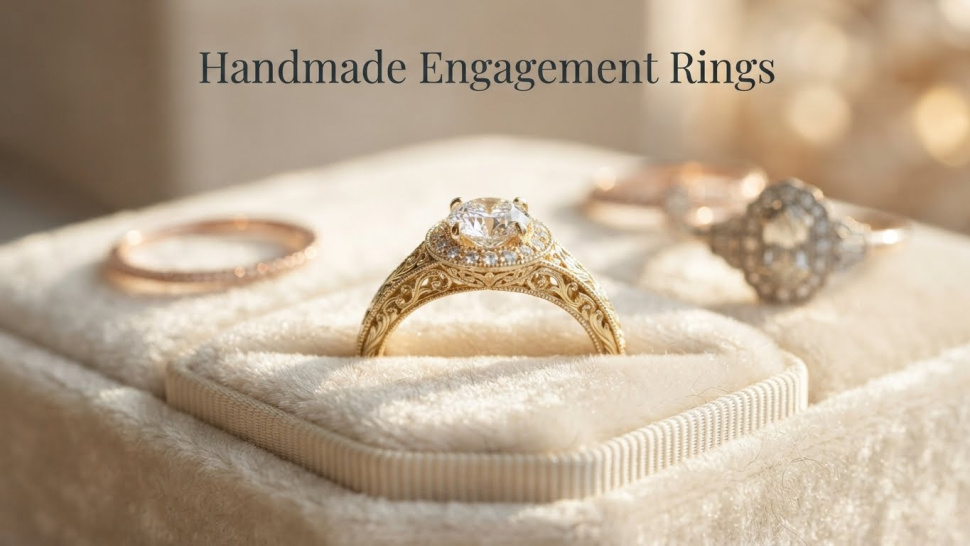

An engagement ring is more than a piece of jewellery; it represents a relationship, a promise, and the beginning of a shared future. While mass-produced rings offer plenty of choices, some couples prefer jewellery that feels more personal and distinctive. Handmade designs can provide an opportunity to explore individual details, carefully selected gemstones, and craftsmanship that reflects a particular style. **Handmade engagement rings** are available in a wide range of designs, from simple gold bands with a single diamond to intricate vintage-inspired pieces and fully customised creations. Understanding the materials, craftsmanship, and design options can help you choose a ring that feels meaningful and suits your everyday needs.
## What Are Handmade Engagement Rings?
Handmade engagement rings are created with significant hands-on work by a jeweller or jewellery artisan. Depending on the design and workshop, the process may involve shaping metal, forming the band, setting gemstones, engraving details, and polishing the finished piece.
Handmade does not necessarily mean that every stage is completed without machinery. Jewellers may use specialised tools, casting, computer-aided design, or other techniques alongside manual craftsmanship. The important consideration is how the ring is made, which stages involve handwork, and the quality of the finished product.
Some handmade rings are produced from an artisan's existing designs, while others are made to order according to a customer's preferences. Custom pieces can provide greater control over the centre stone, metal colour, setting, and decorative details.
Because production methods vary, buyers should ask the jeweller what handmade means for the particular ring they are considering. This helps set realistic expectations about craftsmanship, production time, and price.
## Why Choose a Handmade Engagement Ring?
One of the main reasons people choose handmade jewellery is the opportunity to find a design that feels personal. Instead of selecting a ring solely from standard retail collections, buyers may be able to discuss their ideas directly with the person creating the piece.
### Personalised Design Options
Handmade rings can offer flexibility in design. You may be able to select the gemstone shape, band width, metal type, setting, and engraving. Some jewellers can also incorporate meaningful details, such as a hidden birthstone or a pattern inspired by a special memory.
Personalisation is particularly useful when a standard ring does not match the wearer's preferences. It allows you to balance appearance, comfort, and practicality from the beginning.
### Individual Craftsmanship
Artisans may specialise in particular techniques, such as hand engraving, decorative metalwork, stone setting, or vintage-inspired designs. These skills can create details that distinguish one ring from another.
However, handmade jewellery is not automatically superior to factory-made jewellery. Quality depends on the jeweller's experience, materials, design, and workmanship. Examine the finished ring and ask about the techniques used rather than relying on the handmade label alone.
### Greater Design Flexibility
A handmade ring may allow you to make decisions about details that are difficult to change in a ready-made design. For example, you might request a lower-profile setting, a wider band, or a combination of different gemstones.
Discussing these preferences before production can help create a ring that suits the wearer's lifestyle. It is also an opportunity to understand which design choices may increase the cost or affect durability.
### A More Personal Buying Experience
Working directly with a jeweller can make the purchasing process more collaborative. You may be able to review sketches, discuss gemstone options, and approve design details before production begins.
This approach can be valuable when you have a particular idea in mind but need professional guidance to make it practical. A good jeweller should explain the available options, identify potential limitations, and provide a clear estimate before beginning the work.
## Which Handmade Engagement Ring Styles Are Popular?
Handmade engagement rings can follow traditional jewellery styles or explore more unusual designs. The right option depends on the wearer's taste, preferred materials, and intended daily use.
### 1. Handmade Solitaire Engagement Rings
Solitaire rings feature a single central gemstone, often a diamond, held in a simple setting. Their clean appearance makes them suitable for people who appreciate understated jewellery.
A handmade solitaire can include small personal touches, such as a tapered band, a distinctive prong design, or subtle engraving along the sides. These details can make the ring individual without overwhelming the centre stone.
When selecting a solitaire, consider how securely the gemstone is held and whether the setting is comfortable for everyday wear. A well-designed ring should balance visual appeal with practical construction.
### 2. Handmade Vintage Engagement Rings
Vintage-inspired handmade rings often feature milgrain edges, engraved patterns, delicate filigree, and decorative gemstone arrangements. These details draw inspiration from historical jewellery while allowing the artisan to adapt the design for modern preferences.
Art Deco influences may include geometric shapes and symmetrical patterns, while Victorian-inspired designs can feature romantic details and coloured gemstones.
If you want an authentic antique ring rather than a newly made vintage-inspired piece, confirm its age, provenance, and condition. The terms describe different things, and the distinction can affect both price and expectations.
### 3. Handmade Gold Engagement Rings
Gold remains a popular choice for engagement rings because it offers a range of colours and design possibilities. Yellow gold provides a warm, traditional appearance, white gold has a bright silvery finish, and rose gold offers a soft pink tone.
A jeweller can create handmade gold rings with plain bands, textured surfaces, decorative edges, or gemstone settings. The choice of gold purity also influences the ring's properties and price.
Fourteen-karat gold contains approximately 58.3% pure gold, while 18-karat gold contains 75%. Discuss the advantages of each option with the jeweller, particularly if the ring will be worn every day.
### 4. Handmade Gemstone Engagement Rings
A coloured gemstone can give an engagement ring a distinctive appearance. Sapphires, rubies, and emeralds are popular options, although each gemstone has different durability and care requirements.
Blue sapphires create a classic contrast with yellow or white gold. Rubies offer a rich red colour, while emeralds provide a green centre stone with a distinctive natural character.
Handmade production can allow the setting to be designed around the gemstone's shape and specific requirements. Before purchasing, ask about gemstone identification, treatments, and appropriate care. The jeweller should also explain how the setting protects the stone from accidental impacts.
### 5. Handmade Nature-Inspired Rings
Nature-inspired rings may feature leaf-shaped details, floral settings, twisting bands, or patterns resembling vines and branches. These designs can appeal to people who appreciate organic shapes and artistic jewellery.
Some handmade rings incorporate small diamonds or coloured gemstones into floral arrangements, while others rely on metalwork for their decorative effect.
When considering an intricate design, check that the details are finished smoothly and do not catch easily on clothing. A beautiful ring should also be comfortable to wear and straightforward to maintain.
### 6. Handmade Three-Stone Engagement Rings
Three-stone rings feature a central gemstone with a smaller stone on each side. The arrangement can represent the past, present, and future, although many buyers choose this style simply because they like its balanced appearance.
A handmade design may combine different gemstone shapes, contrasting colours, or a distinctive band. For example, a central diamond paired with smaller sapphires can create a personalised look.
The jeweller should ensure that the stones complement one another and that the setting provides adequate protection. The height and spacing of the stones should also be considered to reduce snagging and improve comfort.
## Which Materials Are Best for Handmade Engagement Rings?
The materials used in a ring affect its appearance, durability, maintenance, and price. Choosing suitable materials is particularly important when commissioning a piece that you expect to wear regularly.
### Gold
Gold is available in different colours and purity levels. Yellow gold offers a traditional appearance, white gold suits contemporary designs, and rose gold creates a softer, warmer effect.
The choice between 14K and 18K gold depends on your preferences, budget, and the intended design. Ask the jeweller to confirm the metal purity and explain how the ring should be maintained.
### Platinum
Platinum is a naturally white metal commonly used in fine jewellery. It is valued for its durability and is suitable for many engagement ring settings, although it may cost more than some gold alternatives.
Its weight, appearance, and maintenance requirements may influence whether it is the right option for you. Compare the finished designs and overall costs before making a decision.
### Natural Diamonds
Natural diamonds form underground over geological timescales. They are widely used in engagement rings because of their hardness and optical properties.
When selecting a natural diamond, compare its cut, colour, clarity, and carat weight. The cut and proportions have a major influence on how effectively the diamond reflects light, so choosing the largest available stone is not always the best approach.
### Lab-Grown Diamonds
Lab-grown diamonds are created in controlled laboratory environments. They have essentially the same chemical composition and crystal structure as natural diamonds, although their origins and market prices differ.
They can be an option for buyers who want a diamond while managing the overall budget. Ask for clear identification and appropriate grading documentation, and compare the stone's characteristics with those of other options.
### Coloured Gemstones
Sapphires, rubies, emeralds, and other coloured gemstones provide alternatives to traditional diamond-centred rings. Their appearance and durability vary, so the gemstone should be selected according to the intended use.
For example, sapphires and rubies are generally suitable for regular wear when properly set, while emeralds often need additional care because of their inclusions and susceptibility to damage from impacts.
## How Much Do Handmade Engagement Rings Cost?
The price of a handmade engagement ring varies according to the materials, design complexity, gemstones, labour, and jeweller's experience. There is no single price that applies to every handmade ring.
A simple gold band with a modest centre stone may cost less than an elaborate ring featuring multiple diamonds, detailed engraving, and a custom setting. A design requiring specialised craftsmanship can also involve additional labour and production time.
To manage your budget, decide on a maximum spending limit before discussing designs. Tell the jeweller which features matter most, whether that means a particular gemstone, a preferred metal, or a distinctive setting.
You can often adjust the design to manage costs. Choosing a smaller centre stone, simplifying the band, or selecting a lab-grown diamond may help reduce the total price. However, avoid compromising essential setting quality or choosing a gemstone without understanding its durability.
Request an itemised quotation that explains the metal, gemstone specifications, labour, and any additional charges. This makes it easier to compare handmade rings with ready-made alternatives and understand what you are paying for.
## How Is a Handmade Engagement Ring Made?
The production process depends on the jeweller and the design, but a custom ring usually follows several stages.
**Design consultation:** The process begins with a discussion about your budget, preferred style, gemstone, metal, and practical requirements. You may share reference photographs or describe the details you want.
**Design development:** The jeweller creates a sketch, digital model, or other design reference. This stage allows you to review the proportions and confirm the main features before production.
**Material selection:** The metal and centre stone are selected according to the agreed specifications. Buyers should confirm the identity, quality, and treatment details of the gemstone where relevant.
**Ring construction:** The artisan shapes, forms, casts, or assembles the ring using suitable techniques. Depending on the design, this may include hand engraving or other decorative work.
**Gemstone setting:** The stone is secured using the chosen setting method. This stage requires precision because the setting must hold the gemstone firmly while supporting the intended appearance.
**Finishing and inspection:** The ring is polished and checked for workmanship, comfort, and setting security before delivery.
Before production begins, ask how many design revisions are included and whether changes after approval will cost extra. Agreeing on the specifications in writing can help prevent misunderstandings.
## How Can You Choose a Reliable Handmade Jewellery Designer?
Choosing the right jeweller is an important part of purchasing a handmade engagement ring. A skilled artisan should be able to explain the design, materials, production process, and expected maintenance clearly.
Start by reviewing examples of the jeweller's previous work. Look closely at the finish, symmetry, stone placement, and quality of decorative details. If possible, view similar rings in person to understand their proportions and construction.
Ask which parts of the ring are handmade and which processes involve machinery or casting. There is nothing inherently wrong with using modern techniques, but the explanation should match the product description.
It is also sensible to confirm the following details before placing an order:
- The exact metal type and purity.
- The gemstone's identity, specifications, and any disclosed treatments.
- The final design and agreed price.
- The estimated production and delivery time.
- The resizing, repair, and maintenance policies.
- The return or cancellation terms for custom-made jewellery.
For valuable gemstones, ask whether suitable independent grading documentation is available. Read customer reviews as well, but consider them alongside the jeweller's portfolio and written policies.
A reliable professional should answer questions patiently and explain any limitations before accepting the order.
## How Do You Care for a Handmade Engagement Ring?
Regular care helps maintain the appearance and condition of an engagement ring. The appropriate cleaning method depends on its metal, gemstones, setting, and any treatments.
For many durable diamond rings, gentle cleaning with lukewarm water, mild soap, and a soft brush may be suitable. However, not all gemstones tolerate the same methods, and delicate settings may require professional cleaning. Avoid harsh chemicals and do not use ultrasonic cleaners unless a qualified jeweller confirms that they are safe for your particular ring.
Remove the ring before activities that could expose it to hard impacts, abrasive materials, or cleaning chemicals. Store it separately from other jewellery to reduce scratches and prevent it from becoming tangled with other pieces.
Have the ring inspected periodically, especially if it contains several small stones or a raised setting. A jeweller can check for loose prongs, worn metal, and other signs of damage.
If the ring becomes bent, a stone moves, or a setting appears damaged, stop wearing it until it has been examined. Prompt attention can help prevent further damage or the loss of a gemstone.
## Are Handmade Engagement Rings Better Than Mass-Produced Rings?
Neither handmade nor mass-produced rings are automatically better. Both can offer excellent quality, and both can vary considerably depending on the manufacturer, materials, and workmanship.
Handmade rings may provide more flexibility for customisation and specialised decorative details. They can be especially appealing when you want a particular setting, unusual gemstone arrangement, or personal engraving.
Mass-produced rings may offer shorter delivery times, standardised designs, and easier price comparisons. Some retailers also provide a wider range of ready-made options that can be viewed before purchase.
The best choice depends on your priorities. If personalisation and direct collaboration with a jeweller are important, a handmade design may be worth exploring. If you prefer a straightforward purchase with a fixed design and clear return terms, a ready-made ring may suit you better.
Rather than choosing based on the label alone, compare craftsmanship, materials, comfort, price, and after-sales service.
## Conclusion
Choosing an engagement ring is an opportunity to find a design that reflects your relationship and personal style. From simple solitaire settings and elegant gold bands to coloured gemstones and intricate vintage-inspired details, handmade jewellery offers many possibilities for creating a distinctive piece. The right choice depends on your budget, preferred materials, craftsmanship expectations, and everyday needs. Before investing in **handmade engagement rings**, discuss your ideas with a reputable jeweller, confirm the specifications in writing, and make sure the finished design balances beauty, comfort, and durability.
## Frequently Asked Questions
### 1. What is special about handmade engagement rings?
Handmade engagement rings can offer individual craftsmanship, distinctive details, and greater opportunities for personalisation. Depending on the jeweller, you may be able to customise the gemstone, metal, band, setting, or engraving.
### 2. Are handmade engagement rings more expensive?
They can be, but not always. The price depends on the materials, labour, complexity of the design, and jeweller's experience. A simple handmade ring may cost less than an elaborate mass-produced design, so comparing complete specifications is important.
### 3. Can I customise a handmade engagement ring?
Yes. Many jewellers offer customisation options, including gemstone selection, metal choice, band design, and engraving. The available options depend on the workshop, so discuss your ideas and budget before approving the final design.
### 4. Which gemstones are suitable for handmade engagement rings?
Diamonds, sapphires, and rubies are commonly used in engagement rings because of their hardness and suitability for regular wear when properly set. Emeralds and other gemstones can also be attractive options, but their durability and care requirements vary.
### 5. How long does it take to make a handmade engagement ring?
Production time depends on the design, availability of materials, customisation requirements, and the jeweller's workload. A simple design may take less time than a ring involving intricate metalwork or specially sourced gemstones. Ask for an estimated completion date before ordering.
### 6. How can I verify the quality of a handmade engagement ring?
Review the jeweller's previous work, confirm the metal purity and gemstone specifications, and inspect the setting and finish. Ask for written documentation, clear warranty and resizing terms, and independent gemstone grading reports where appropriate.



Share the News