

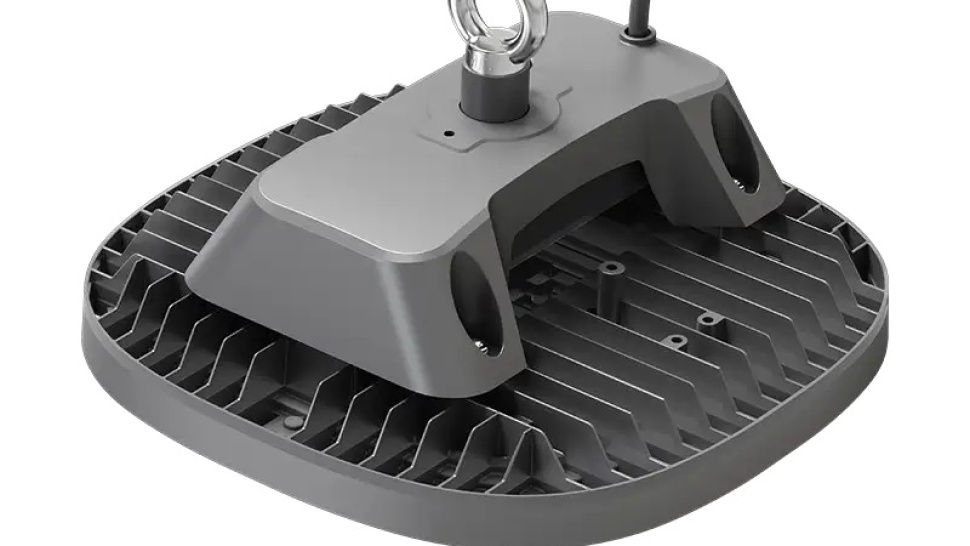

Energy costs are one of the largest ongoing expenses for many businesses, and lighting is often a bigger part of that bill than people expect. In warehouses, factories, and logistics centers, hundreds of fixtures may run for twelve, sixteen, or even twenty-four hours a day. Every watt saved per fixture is multiplied across the entire building and across every operating hour, which is why lighting upgrades frequently deliver some of the fastest returns of any efficiency project.
A Guide from KML, an Experienced LED Highbay Light Manufacturer
Over the years, businesses have relied on several lighting technologies, including incandescent lamps, halogen bulbs, fluorescent tubes, and high-intensity discharge lamps such as metal halide and high-pressure sodium. Each has its own strengths and weaknesses, but LEDs consistently outperform them all on energy use. Understanding exactly why helps buyers appreciate the value of upgrading and choose the right fixtures for their facilities. This guide breaks down the technical and practical reasons behind LED efficiency, with a particular focus on industrial and high-ceiling applications.
A More Efficient Way to Create Light
The core advantage of LEDs lies in how they produce light. Incandescent and halogen lamps heat a filament until it glows, wasting most of their energy as heat. Fluorescent and HID lamps use gas discharge, which is more efficient but still involves losses and additional components. LEDs generate light directly from a semiconductor through electroluminescence, converting a much greater proportion of electricity into visible light. This fundamental difference means that for any given brightness level, an LED fixture simply needs less power than the alternatives.
Light Goes Exactly Where It Is Needed
Traditional lamps emit light in all directions, so a large share of their output is lost inside reflectors or spills onto ceilings and walls. LEDs are naturally directional, and modern optics allow manufacturers to shape the beam precisely. Working with a skilled led highbay light manufacturer such as KML means fixtures are designed with lenses and reflectors that direct light down onto aisles, racks, and work areas from considerable heights. Less wasted light means fewer fixtures or lower wattages are needed to achieve the same illumination on the working plane, which reduces energy consumption across the facility.
No Warm-Up or Restrike Delays
High-intensity discharge lamps, long used in warehouses and factories, take several minutes to reach full brightness and often need to cool down before they can restart after being switched off. Because of this, many facilities simply leave them running all day, even when areas are empty. LEDs reach full output instantly and can be switched on and off as often as needed without harming their lifespan. This makes it practical to turn lights off in unused areas, cutting operating hours and reducing energy waste significantly.
Excellent Compatibility with Controls
The instant response of LEDs opens the door to smart controls that older technologies could not support effectively. Occupancy sensors can dim or switch off lights in quiet aisles, daylight harvesting systems can reduce output when sunlight enters through skylights, and scheduling tools can match lighting to shift patterns. Dimming LEDs also reduces stress on their components, so the energy savings come with a lifespan benefit. For large facilities, combining efficient fixtures with intelligent controls often produces savings far greater than the fixture upgrade alone.
Lower Heat Means Lower Hidden Costs
Inefficient lamps produce large amounts of heat, and that heat has to be managed. In air-conditioned buildings, cooling systems must work harder to remove it, adding to energy consumption. In cold storage and refrigerated warehouses, every unit of heat from lighting has to be removed by refrigeration equipment that is expensive to run. LEDs release far less radiant heat into the space, reducing these hidden costs. Effective thermal design within the fixture itself remains important, which is why KML focuses heavily on heat dissipation in its research and development work.
Stable Output Over Time
Many traditional lamps lose brightness steadily as they age, which forces facilities to install extra fixtures or higher wattages at the outset to compensate for future decline. Quality LEDs maintain their light output much better over their working life, so systems do not need to be heavily over-specified from the start. This lumen maintenance advantage means less energy is spent producing surplus light in the early years of operation. Careful thermal design and quality components are the key to achieving this stability.
Reduced Maintenance Energy and Labor
Energy savings are not limited to the electricity running through the fixtures. Frequent lamp replacements in high-ceiling buildings require lifts, scaffolding, and technicians, all of which carry costs and sometimes disrupt operations. Longer-lasting LEDs drastically reduce how often this work is needed. KML products are built for durability exceeding 100,000 hours and pass through IQC, IPQC, and OQC inspections plus extended burn-in testing before leaving the factory, helping customers keep maintenance to a minimum over the life of the installation.
Planning a Layout for Maximum Savings
Even the most efficient fixture will waste energy if the lighting layout is poorly planned. Too many fixtures, the wrong beam angles, or incorrect mounting heights can lead to over-lighting in some areas and dark spots in others. Professional lighting design ensures the right number of fixtures are placed in the right positions. KML provides DIALux lighting simulations, often completed within a couple of hours, along with free initial design consultation. This helps customers achieve the required brightness with the lowest possible energy consumption from day one.
The Bottom Line for Businesses
LEDs use less energy than other lighting options because they create light more efficiently, direct it more precisely, work instantly with smart controls, produce less waste heat, and maintain their output for longer. For businesses operating large facilities, these advantages translate into lower bills, reduced maintenance, and progress toward sustainability goals. By choosing a manufacturer with strong engineering, rigorous quality control, and responsive support, companies can ensure their LED upgrade delivers the full savings the technology promises.



Share the News